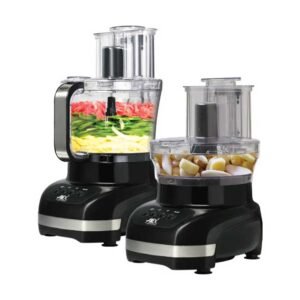
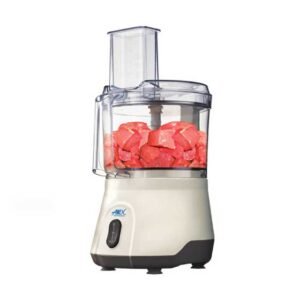
If you’re looking for a fast, tidy way to handle daily prep — onions, tomatoes, chilies for salan, nuts for kheer, or a small batch of qeema — an Anex chopper is the compact, time-saving tool most Pakistani kitchens appreciate. This category brings together our latest Anex choppers so you can compare capacity, bowl material, power, and accessories in one place and order with confidence.
Trusted seller in Karachi: Emirates Electronics, Office No 206, 2nd Floor, Seema Electronics Centre, Abdullah Haroon Road, Saddar, Karachi. For quick help, call 0339 2009000. We focus on original stock and brand-backed warranties, so you get performance and after-sales support — not surprises.
Below you’ll find plain-English guidance on choosing the right Anex vegetable chopper, what impacts Anex chopper price in Pakistan, and how to check live price and availability online. If you’re comparing a mini food chopper for quick salsa or baby food versus a larger bowl for meat and tougher ingredients, the sections ahead will point you to the best match for your kitchen and budget.
Shop Anex Choppers (All Models & Latest Stock)
Quick filters: pick by use, power, and bowl
Use case tags: vegetables | meat (small batches) | nuts | chutneys | baby food. Think about your most frequent tasks. If you mostly prep masala bases, a compact bowl with 2-blade stack is often enough. If you’ll do tougher chopping (dry fruits or small-batch mincing), consider higher power and a 4-blade stack.
Power: Mini choppers sit in the ~300–500W range for daily veg, herbs, and chutneys. If you want more headroom for dense items, look at models labeled 500W or higher. (Remember: wattage isn’t the whole story — blade design and bowl shape also affect results.)
Bowl material: Glass resists odors and stains (great for onion/garlic mixes) and adds stability; plastic is lighter and easier to lift from the counter. If you share the kitchen with kids or prefer lighter gear, plastic may feel friendlier; if you want that “no smell” confidence, glass is worth it.
Capacity: Mini (≤500 ml) is perfect for everyday masala and baby food; mid (≈0.8–1.2 L) suits family prep; larger bowls help when you want fewer batches. A simple rule: if you routinely chop more than two medium onions at once, aim mid-capacity or higher.
Blades: Stainless steel is the norm; look for 2- vs 4-blade stacks. Two blades are efficient for herbs and soft veg. Four blades speed up bulk chopping and help with tougher textures. If you plan to process meat or nuts occasionally, the 4-blade set is a smarter pick.
Prefer to browse visually first? Explore our full chopper lineup here: Explore all choppers.
Model highlights (popular searches)
AG-3048: A dependable all-round Anex chopper for everyday vegetables, herbs, and chutneys; a solid entry if you’re upgrading from manual chopping.
AG-3049 (often 500W class): A great pick if you want extra punch for mixed tasks including small-batch meat and tougher ingredients. To view live details: Anex Deluxe Chopper AG-3049 — see current price & stock.
AG-3046: Frequently searched in Pakistan; availability can vary over time. If you don’t see it in stock, check adjacent models (AG-3048 or AG-3049) for similar capacity and accessories.
Tip: When comparing, open two product pages side by side to compare stated capacity, included bowl (glass vs plastic), and blade stack. For a representative option, see Anex Deluxe Chopper AG-3048 — product page.
Today’s Prices & Deals in Pakistan
What affects Anex chopper price?
Power rating: As wattage increases, motors tend to cost more. A 500W Anex chopper typically prices higher than a compact 300W mini unit. If your main job is vegetable prep, you can save by choosing an efficient mid-range model and a sharp 2-blade set.
Bowl material & capacity: Glass bowls, thicker walls, and larger capacities generally push the price up. If you want an Anex chopper glass bowl specifically for odor control, plan for a higher price tier.
Blade set & accessories: Four-blade stacks, extra jars, or bonus lids add utility and cost. If you don’t need extras, stick to a simple stainless 2-blade configuration to keep costs lean.
Warranty & authenticity: Original stock with a proper brand warranty card and verifiable packaging may price above grey imports. You’re paying for peace of mind and service support — worthwhile for a high-use kitchen tool.
How to see live price & buy online (Pakistan)
We don’t publish static prices here because they move with imports and inventory. For the latest Anex chopper price in Pakistan, open the specific product page. You’ll see current price, stock status, delivery options, and any bundle or seasonal deals. If you want direct guidance on “best Anex chopper for kitchen Pakistan” based on family size and budget, call us at 0339 2009000, and we’ll recommend a model in two minutes.
Fast checkout: Choose your Anex model, add to cart, and complete the order online. If you prefer in-store validation, visit us at our Saddar outlet (address above). For related tools (smoothies, lassi, masala grinding), see our Blender & Grinder category later in this guide.
Heads-up on availability: Specific SKUs (e.g., Anex chopper AG-3049 price or colors) can change quickly. If the exact model you searched isn’t visible, pick the closest match with the same capacity and blade stack, or call us — we’ll confirm what’s in stock and suggest a like-for-like alternative.
Only Original Anex with Official Warranty
Warranty & authenticity checks
When you buy an original Anex chopper with warranty, you’re paying for consistent performance and real after-sales help. Before you unbox, check the outer packaging for intact brand seals and proper printing, not faded or generic stickers. Inside, you should find a warranty card or documentation from the brand or distributor. If your model includes a serial or batch code, keep a clear photo of it along with your invoice for easy verification later.
On delivery day, do a quick functional test: fit the bowl (glass or plastic), lock the lid, and run the motor for a second or two with a small onion or a handful of coriander. You’re not stress-testing it—just confirming normal sound and smooth operation. If anything feels off (excess vibration, a burning smell, or a lid that won’t lock), stop, note the issue, and contact us right away so we can guide you through the correct support channel. This simple check protects your warranty from the start and saves time.
How we support your claim (Karachi service help)
Emirates Electronics is a Karachi-based retailer, which means you can call for quick guidance or visit our outlet if you prefer in-person help. For a warranty claim, bring your purchase invoice, the warranty card (if provided), and the complete unit (base, bowl, lid, blades). We’ll help you identify whether the case is a quick fix—like a lid-lock not seated—or whether it needs brand service. Our team can advise how to package the unit safely and where to drop it for authorized inspection.
Typical warranty coverage focuses on manufacturing faults; consumables (like Anex chopper stainless steel blades) and damage from misuse are usually excluded. If the issue is outside warranty, we’ll still help you find the right Anex chopper parts & blade replacement so you can get back to cooking with minimal downtime. Keep the product’s exact model handy (e.g., AG-3048, AG-3049) so we can match compatible parts and avoid mis-orders.
Compare Anex Choppers (Choosing the Right One)
Capacity & kitchen size
Capacity determines how many batches you’ll run for daily prep. A mini food chopper (≤500 ml) is ideal for the average masala base—think two onions, one tomato, green chilies, and coriander—especially if you prefer fresh, small batches. For larger families or weekly meal prep, a mid-size bowl (≈0.8–1.2 L) cuts down repeat cycles and helps maintain consistent texture across the whole mix.
Consider your counter space and routine. Karachi apartments often favor compact appliances that live in a cabinet; a lighter, mid-capacity bowl is easier to move and wash daily. If you host often or prepare biryani masala for the week, a larger bowl saves time. The best rule of thumb: if you regularly chop more than two medium onions at once, step up from mini to mid-capacity to avoid overfilling and pulsing forever.
Power & performance
Motor wattage influences how confidently a chopper handles dense ingredients. For everyday veg, herbs, and chutneys, many households are happy in the ~300–500W range. If you plan occasional meat work (small batches of boneless pieces) or tougher items like dry fruits, a higher-power model offers extra headroom and keeps textures more even with fewer pauses.
Technique matters too. Instead of a long, continuous run, use short pulses to control texture and prevent heat buildup, especially with onions (to avoid turning them watery) and nuts (to avoid accidental pastes). Check your model’s manual for recommended duty cycles (e.g., 15–30 seconds on, cool down) to protect the motor. If you’re comparing “Anex meat chopper price” versus a basic veg unit, remember you’re paying for stronger motors and blade stacks that keep results consistent under load.
Bowl material & maintenance
A glass bowl chopper resists odors and stains from onion, garlic, and masala—handy when you cook daily. It’s heavier, which adds stability on the counter, but handle with care: avoid sudden temperature shocks (don’t rinse a hot bowl under cold water). Plastic bowls are lighter and easier to lift for quick rinsing, and many home cooks prefer them for speed; just be mindful of turmeric stains and use mild detergents to preserve clarity.
Whichever you choose, keep a drying routine: after washing, let the bowl air-dry upside down to keep water away from the blade hub and lid mechanism. If you switch between savory (onion/garlic) and sweet (kheer garnishes), do a quick baking-soda rinse to neutralize odors. This small habit keeps your Anex vegetable chopper “flavor-neutral” and ready for the next task.
Blade sets & replacements
Most Anex models ship with stainless steel blades—either a 2-blade or 4-blade stack. Two blades handle herbs and soft vegetables efficiently, while four blades speed up larger batches and improve consistency in denser mixes. If you frequently do mixed tasks (veg + nuts + occasional meat), a 4-blade model is a sensible, future-proof choice that reduces time at the counter.
Blades are sharp tools and wear gradually with heavy use. If you notice fraying edges on coriander, uneven onion pieces, or extra pulsing needed to reach your usual texture, it may be time to consider blade replacement. Match the replacement to your exact model (AG-3046, AG-3048, AG-3049, etc.) to ensure shaft and stack compatibility. If you’re unsure, contact us with a quick photo of the blade hub; we’ll help you confirm the right part and whether a 2- or 4-blade set suits your routine better.
Putting it together: best fit by profile (Pakistan)
Small households / quick daily prep: A compact Anex mini food chopper with a 2-blade stack is budget-friendly and easy to rinse after every meal. It’s perfect for chopping masala bases, green chutney, or a baby-food portion on the spot.
Family kitchens / mixed tasks: Choose a mid-capacity bowl and higher power for reliable results across onions, tomatoes, nuts, and occasional meat. A 4-blade stack maintains even texture with fewer pulses, and a glass bowl stays neutral between savory and sweet prep. If you’re searching “best Anex chopper for kitchen Pakistan,” this balanced setup suits most homes wanting one tool for many jobs.
Popular Use-Cases (Pakistan)
Everyday prep for Pakistani meals
For most homes in Pakistan, the Anex chopper’s daily job is fast, consistent prep for salan, bhuna masala, and curries. A compact bowl with stainless steel blades handles the classic trio—onions, tomatoes, and green chilies—without leaving large chunks behind. Use short pulses rather than a long hold; pulsing lets you choose texture: coarse for salan, finer for kofta gravy, or very fine for smooth sauces. If coriander or mint leaves are going in, add them last and pulse two or three times to keep them vibrant rather than wet and bruised.
When prepping onions, cut them into quarters first and drop them evenly around the blade stack. If you’re using a mini capacity, split the load into two batches to avoid compressing the bottom layer, which can turn watery. For tomatoes, remove excess seeds for a thicker base, or leave them in if you want extra moisture for simmering. A few garlic cloves and a slice of ginger will blend quickly—keep an eye on them so they don’t turn into paste unless you want that result for marination.
Protein & nuts (small-batch convenience)
Many shoppers search for “Anex meat chopper price” because they want a small helper for boneless chicken or beef in tight kitchens. An Anex chopper can do small batches of boneless meat for kebab mixes or qeema-style fillings, provided you follow two rules: use a higher-power model (often around the 500W class) and work in short pulses with chilled meat. Overfilling or continuous runs can heat the meat and change texture. Aim for 6–10 quick pulses, stop, scrape the sides, and finish with another 4–6 pulses to reach your preferred mince size.
Dry fruits and nuts—almonds for kheer, pistachios for garnishing, peanuts for chutneys—are straightforward with a sharp blade stack. For coarse pieces, pulse only 2–4 times and stop; for finer results, do short bursts in sets and check frequently to avoid accidental pastes. If you make nut butter intentionally, add a teaspoon of neutral oil and pulse in steps, resting the motor between cycles. Always keep the lid firmly locked and avoid exceeding your bowl’s max fill line, especially with dense ingredients that load the motor quickly.
Baby food, chutneys & Ramadan prep
For baby food, the Anex mini food chopper is ideal because you can make tiny, fresh portions without cross-flavors. Steam vegetables until soft, let them cool slightly, then pulse to your chosen consistency. Keep the bowl and blades squeaky clean for this use—run a mild baking-soda rinse after onion/garlic sessions to ensure no savory residue remains. If you prepare fruit purees, avoid overprocessing watery fruits; pulse briefly and drain excess juice if needed for a spoonable texture.
Chutneys—coriander, mint, tamarind—benefit from a short, controlled chop. Add solids first, pulse, then drizzle in liquid slowly to maintain thickness. During Ramadan, many homes batch-prep fillings and garnishes; your chopper can speed up samosa/onion mixes, masala bases for pakoras, and fresh garnishes for iftar platters. Plan batches and label them clearly; glass bowls help avoid lingering aromas if you’re alternating between savory and sweet preparations.
Care, Cleaning & Parts
Cleaning routine (under 2 minutes)
Good cleaning habits keep performance high and flavors clean. After each use:
- Unplug first. Detach the lid and blade stack carefully, holding the hub, not the cutting edge.
- Quick rinse. Rinse the bowl and blades immediately; dried onion or nut residue is harder to remove and can dull blades over time.
- Mild wash. Use warm water with a drop of dish soap. Avoid abrasive pads that scratch plastic bowls and dull the stainless steel blade edges.
- Dry thoroughly. Air-dry the bowl upside down; pat the blade hub dry to prevent moisture near the shaft. Residual water can affect bearings and attract odors.
- Odor reset (as needed). For strong aromas (garlic, fish sauce), a baking soda rinse or a few drops of lemon juice in warm water clears smells fast.
For the motor base, wipe with a slightly damp cloth only—no submersion. Moisture in the motor housing voids warranty claims and shortens appliance life.
Blade & bowl care
Stainless steel blades are durable, but they do lose edge over time if used heavily or cleaned improperly. Avoid knocking blades against the sink or scrubbing them with metal pads. If you notice more pulsing than usual to reach the same texture—or uneven cuts with stringy coriander—it’s a sign to consider sharpening or replacement. Handle blades with care when loading or unloading; a safe grip is by the central hub, not the cutting edges.
Glass bowls resist staining and odors, making them popular with frequent cooks. Protect them from thermal shock: don’t run cold water over a hot bowl or place a cold bowl onto a hot surface. Plastic bowls are lightweight and fast to handle; wash them with soft sponges and mild detergents to avoid micro-scratches that trap odors. To keep both bowl types clear, avoid turmeric sitting for long periods—rinse promptly after cooking.
Parts & blade replacement (how to match correctly)
When you’re ready for Anex chopper parts & blade replacement, matching the exact model is essential. Note the SKU (e.g., AG-3046, AG-3048, AG-3049) from your product page or the label under the base. Take a clear photo of your current blade stack showing the shaft and number of blades (2 or 4). This prevents ordering a part that won’t fit your lid or hub.
Replacement timing depends on use. A household that chops onions daily and nuts weekly will wear blades faster than an occasional user. If you prepare mixed tasks—including small-batch meat—expect to evaluate blades every 6–12 months. You don’t need to wait until performance drops dramatically; replacing slightly early keeps textures even and reduces motor strain. When swapping blades, inspect the lid-lock and bowl rim as well—an ill-fitting lid causes poor chopping and can sound like a “rattle” even with sharp blades.
Safety checklist (do’s & don’ts)
- Do use short pulses; it protects the motor and gives you texture control.
- Do cut large ingredients into manageable chunks for even processing.
- Do keep fingers clear: lift blades by the central hub and store them with guards if supplied.
- Don’t overfill above the max line—uneven chopping and strain follow.
- Don’t run continuously beyond the model’s recommended duty cycle; allow brief cool-downs between sets.
- Don’t pour boiling liquids directly into the bowl; let them cool first, especially with plastic bowls.
Follow these basics and your chopper will remain a reliable daily tool. If you’re unsure whether your use case needs a 2-blade or 4-blade stack—or if you should upgrade power for tougher tasks—call us at 0339 2009000. We’ll help you choose a setup that keeps pace with your kitchen without overbuying.
When to consider an upgrade
If your cooking has evolved—say you’re hosting more often, experimenting with nut pastes, or preparing baby food alongside daily masala—it may be time to step up to a higher-capacity bowl, a glass bowl for neutrality, or a model nearer the 500W range. Rather than chasing the “highest wattage,” look at your real tasks. The most comfortable upgrade is the one that reduces batch count and improves consistency for your most common recipes. If you’re comparing “Anex chopper 500W price” with a smaller unit, weigh the time saved per session—a few minutes daily adds up over the year.