

Baby Bottle Sterilizer
Showing all 2 resultsSorted by latest
-
Baby Bottle Sterilizer, Baby Care, Health & Beauty
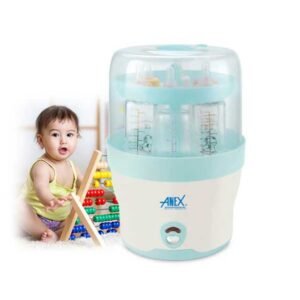
Anex Deluxe Baby Bottle Sterilizer AG-736
0 out of 5(0)- 220-240V
- 50/60Hz
- 500W
- Working Light, start button.
- Auto shut-off.
- Plastic bottle clamp.
- Stainless steel heating element.
- Overheating protection.
- Sterilizes 6 bottles in 10 minutes.
- Suitable for all kinds of standard bottles.
- Easy to clean and completely disassembled.
SKU: n/a -
Baby Bottle Sterilizer, Baby Care, Health & Beauty
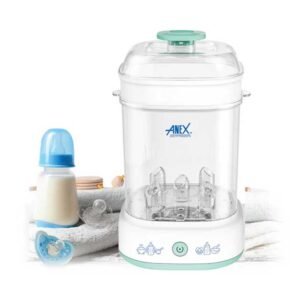
Anex Deluxe Baby Bottle Sterilizer AG-737
0 out of 5(0)- 220-240V
- 50/60Hz
- 500W
- 8-10 minutes fast steam sterilizing,
- Sterilize 4-5 bottles at the same time.
- Automatic shut off system to avoid over burnt.
- Can do steaming function for baby food and eggs.
- Stainless steel heating plate with button control & indicate light.
- One button can control the working process.
- Three different accessories combination for different use.
- Food grade PP material for safety baby range.
SKU: n/a
Showing all 2 resultsSorted by latest
Baby Bottle Sterilizers in Pakistan — Safe, Simple & Time-Saving
Shop Baby Bottle Sterilizers (Quick Picks & How to Choose Fast)
New parents in Pakistan juggle a lot—feedings, sleep schedules, and the never-ending wash-and-dry cycle. A good baby bottle sterilizer helps you keep feeding parts hygienic with far less effort, reducing contact with harmful germs without turning your kitchen into a science lab. Below is a quick, practical way to narrow choices in minutes. If you’re in a Karachi flat with limited counter space, have a larger family in Lahore, or you travel often between cities, the right “type” and capacity will do most of the decision-making for you.
Types at a glance
Electric steam sterilizers heat water to create steam that reaches into bottle interiors and small crevices. They’re popular for everyday home use because they’re hands-off: load, add water, press start. Many offer stackable trays for teats, pump parts, and pacifiers. If your routine includes back-to-back feeds, an electric unit’s repeatable cycles can be a big time saver. For homes with frequent load-shedding, pair use with your inverter/UPS schedule for smoother timing.
Microwave sterilizers are lightweight tubs or bags that go straight into a microwave—great for tight counters or small kitchens. They’re fast, affordable, and surprisingly roomy, but depend on microwave availability and wattage. If you live in a hostel, share a kitchen, or want a travel-friendly option to take to grandparents in Islamabad, microwave models are hard to beat. Just confirm your microwave’s internal height and turntable size before buying so the tub sits flat and rotates freely.
UV sterilizers use ultraviolet light inside a reflective chamber to treat bottles and accessories, often with a built-in drying mode. They typically keep items dry and ready for storage with minimal condensation—useful in humid climates or homes where you prefer low-moisture cabinets. UV cabinets usually cost more but offer tidy, closed-door storage that doubles as a mini-cupboard. If your kitchen doubles as a nursery prep zone, UV provides a neat, all-in-one station.
Sterilizer-dryer combos add heated or filtered drying to steam or UV, so you can put parts away immediately. Parents who prep night feeds in advance love this “one-and-done” workflow. While combo units cost more up front, they can save time daily and reduce the need for separate drying racks (handy when counter space is limited).
Portable/travel sterilizers include microwave bags and compact electric or UV gadgets sized for 1–2 bottles or pacifiers. They’re perfect for day trips, NICU visits, or keeping at grandparents’ homes. If your routine includes visits to clinics or you’re back at work and pumping, a mini option keeps small parts hygienic between sessions without hauling the main unit around.
Capacity & family fit
Right-sizing capacity prevents re-running cycles all day. A compact unit that holds 3–4 bottles suits single-baby households or mixed feeding. Families using expressed milk or twins typically prefer 6–8 bottle capacity to process bottles, teats, collars, and pump parts in one go. Think about your drying rack space too: if you plan to air-dry, a slightly larger chamber reduces crowding and improves airflow. Households in Lahore or Karachi with shared kitchens may prefer narrower, taller units that stack vertically rather than sprawling across the counter.
Consider bottle shapes: wide-neck (e.g., many anti-colic designs) take more space per bottle, while standard-neck styles pack more efficiently. If you switch between brands, look for modular racks and removable posts so you can reconfigure the chamber. Pump users should confirm there’s room for flanges, valves, and membranes; some units include dedicated trays to keep tiny parts from flying around mid-cycle. If you sterilize a day’s worth of gear after Isha, a larger chamber means fewer nighttime cycles—and more actual rest.
Setup & compatibility
Most home units in Pakistan run on 220–240V, so compatibility is straightforward for local sockets; just confirm plug type and cord length if your counter outlets are limited. Steam units need fresh water every cycle—distilled or previously boiled and cooled water helps reduce mineral buildup, especially in hard-water areas like much of Karachi. UV units rely on bulb or LED modules; check that replacements are readily available and note the suggested replacement schedule in the manual to keep performance consistent.
In terms of bottle brands, most sterilizers accept a mix (Avent, Tommee Tippee, and others) as long as the chamber dimensions and posts match the bottle necks you use. If you mix wide-neck anti-colic bottles with narrow travel bottles, choose a unit with removable posts and a flat accessory tray so you can configure each cycle. For microwave models, match the tub’s footprint to your microwave turntable; for travel bags, verify the recommended wattage and time settings. A small placement tip: keep the unit on a heat-resistant, level surface with a little breathing room around it, especially in smaller apartments where ventilation can be limited.
Tip: If you plan to upgrade bottles later or add a bottle warmer to your routine, pick a sterilizer that won’t force a re-buy—modular trays and taller lids future-proof your setup and keep your total cost lower over the first year.
Compliance notes: We avoid medical guarantees (e.g., “kills 99.9%”). Instead, we focus on practical hygiene steps and correct operation to help reduce exposure to harmful germs.
Buying Guide for Pakistan
Steam vs UV vs Microwave — which is right for you?
Steam (electric) models are the everyday workhorses. They heat a small amount of water to create steam that reaches inside bottles and teats. If you prefer a set-and-forget routine and usually process 4–8 items at once, an electric steam baby bottle sterilizer is a dependable choice. Cycle times vary by model, but many complete in well under an hour and some add drying so you can store items immediately. In apartments with limited space, look for a tall, narrow footprint with modular racks that handle wide-neck bottles and pump parts together.
UV cabinets use ultraviolet light and reflective interiors to treat surfaces while keeping things dry. Parents who dislike condensation or live in humid homes often choose UV for the tidy, cupboard-style storage it provides. A UV bottle sterilizer in Pakistan typically costs more than steam or microwave options, but the convenience of “sterilize + dry + store” in one unit can justify the premium for night-feed routines. If you’re sensitive to electricity use, check idle power consumption and auto-off features so the chamber isn’t running longer than needed.
Microwave tubs/bags are the minimal, great-value route. They are light, quick, and ideal for travel or shared kitchens, provided you have access to a microwave. A microwave sterilizer for baby bottles works best when you match the tub size to your turntable and follow time/wattage guidance precisely. For families moving between Karachi, Lahore, and Islamabad on weekends, microwave bags pack flat in a diaper bag and handle small batches of pacifiers and bottle parts with almost no counter footprint.
Which to pick? Choose steam for everyday simplicity and value; UV for low-moisture storage and integrated drying; microwave for speed, portability, and tight budgets. Combo designs—like a bottle sterilizer and dryer—reduce steps for busy schedules, while portable/travel sterilizers cover clinic visits or office pumping sessions. In all cases, make sure capacity fits your daily bottle count so you aren’t re-running cycles late at night.
Must-have features
Capacity you’ll actually use: A chamber that holds your full day’s bottles plus teats and a few pump parts is better than a cramped unit that forces multiple runs. If you use wide-neck anti-colic bottles, confirm there’s room for collars and vents without crowding. Modular racks and removable posts let you rearrange for odd-shaped accessories, while a flat accessory tray prevents tiny parts from shifting during cycles.
Drying and auto shut-off: Drying saves counter space and nighttime effort; look for timed drying cycles or sensor-based options so you’re not guessing. Auto shut-off prevents overcooking the last water in steam units and protects components if you forget to power down. Simple controls—one-touch start and clear indicators—matter at 3 a.m. when you’re bleary-eyed and just need clean, dry parts without fiddly menus.
- Cycle time transparency: Realistic timings help plan feeds; avoid models that bury cycle info behind vague icons.
- Filter or venting quality: Some dryer combos include replaceable filters—check replacement cost and availability in Pakistan.
- Durability & upkeep: Hinges, trays, and seals should feel sturdy; smooth surfaces clean faster and resist limescale lines.
- Safety notes: Heat-resistant handles, stable base, and splash-guard designs reduce accidents in small kitchens.
Power & home realities
Homes in Pakistan frequently juggle load-shedding, UPS, and inverter timings. For an electric bottle sterilizer in Pakistan, match the unit’s wattage to your backup system’s capacity and schedule cycles when power is stable. Steam models draw a short, higher burst; UV cabinets may draw less per minute but for longer. If your inverter has a tight load limit, a microwave-based routine might fit better: sterilize a small batch quickly when power returns, then store items in a clean, closed container.
Placement matters for both safety and performance. Keep any sterilizer on a level, heat-resistant surface with a little clearance for vents, especially in compact Karachi apartments where counters abut walls. Avoid tucking a steam unit under upper cabinets where rising vapor could warp wood over time. For UV cabinets, confirm airflow around vents and avoid direct sunlight on the door to maintain internal temperature consistency.
- Cord length & plug type: Check reach to outlets you can dedicate for a 20–60-minute window, so you’re not unplugging other essentials.
- Noise considerations: Dryer fans are typically modest, but if your nursery corner shares the kitchen, quieter models reduce nighttime disturbance.
- Batching strategy: Align one or two cycles with your feeding schedule—e.g., after Fajr and after Isha—to keep parts ready without constant running.
Water quality & limescale
Many Pakistani cities—especially coastal areas like Karachi—have hard water that leaves mineral deposits in steam chambers and on heating plates. While these marks are normal, heavy buildup can slow cycles and create hot spots. To limit limescale, use distilled water where practical, or add previously boiled, cooled water to the reservoir. Empty any remaining water after each run and leave the lid slightly open to let moisture escape. This simple habit keeps the chamber fresher between cycles.
Plan a quick monthly descale (more often if you notice white crust). A common approach is mixing a small amount of food-grade citric acid with water, running a brief heating cycle (or soaking per manual), then rinsing thoroughly. Avoid harsh chemicals that might linger or damage seals. If you see streaks on bottles after cycles, switch to distilled water and confirm you’re not overfilling the chamber. For UV units, wipe the interior with a soft, dry cloth and keep sensors/bulbs dust-free; for microwave tubs, wash and air-dry the lid and tray to prevent odor transfer.
- Tell-tale signs: Brown/white crust on heating plates, slower heat-up, or a “hot metal” smell—time to descale.
- Filter changes: If your sterilizer-dryer uses a replaceable filter, set a reminder aligned with your local dust levels (often 2–3 months).
- Bottle care: Rinse milk residue thoroughly before cycles; residue can bake on and create off-odors over time.
Tip: Keep a small, labeled jar of citric acid in the kitchen and run a 10–15 minute descale on the first weekend of each month; tie it to your grocery day so it becomes automatic.
Price in Pakistan — What Affects Cost (No Guesswork)
Factors that change price
When parents search for a baby bottle sterilizer price in Pakistan, the wide range can feel confusing—until you map prices to a few predictable drivers. The first and biggest factor is the sterilization method. Electric steam models generally start lower on the price ladder and scale up as capacity and drying features increase. Microwave sterilizers (tubs or bags) are typically the most affordable because they rely on your microwave for heat. UV bottle sterilizers in Pakistan usually sit at the higher end owing to the LED/bulb hardware, reflective chamber design, and often a built-in drying/storage function.
Capacity is the next price lever: chambers that fit 6–8 wide-neck bottles and pump parts cost more than compact 3–4 bottle designs. If you’re feeding twins, pumping at work, or prepping nighttime bottles in batches, the time you save with a larger chamber can offset the higher upfront cost. On the other hand, if you mostly combo-feed or sterilize just a couple of items daily, a smaller feeder sterilizer keeps costs and counter space down.
Drying and filtration add convenience (and cost). A bottle sterilizer and dryer removes the need for a separate rack and leaves parts cupboard-ready. Some dryer combos also include replaceable filters; that ongoing consumable is small but worth noting in your yearly budget. Build quality and materials matter too: sturdier hinges, heat-resistant handles, and smooth interiors that resist limescale typically correlate with a slightly higher price but reduce headaches over time.
Brand and warranty influence value perception. International names familiar to Pakistani parents—such as Avent or Tommee Tippee sterilizer lines—often command a premium for design, accessories, or support. Less-known brands can be great value if they provide clear cycle information, reliable after-sales service, and readily available parts (like UV bulbs/LEDs or filters). Always check what the warranty actually covers (heating plate, electronics, door mechanisms) and how claims are handled locally.
Finally, feature clarity plays a role. Models that clearly state cycle times, capacity (with wide-neck examples), and drying duration help you buy once and buy right; vague listings may look cheaper but risk mismatch and returns. When you compare the feeder sterilizer price in Pakistan, put a number on your time: shaving 15–20 minutes off daily drying or reducing late-night re-runs can easily justify stepping up a tier.
How to get the best deal
Start with your daily load. If you regularly process 5–8 items, short-list a mid-to-large electric bottle sterilizer Pakistan model with drying to eliminate a separate rack. If you travel on weekends or visit grandparents, add a portable baby bottle sterilizer (e.g., microwave bags) as a low-cost complement instead of upsizing the main unit. For humid coastal homes, UV’s dry-store advantage may reduce re-washing—a value you’ll feel every week.
To stretch your budget, consider a bundle strategy. Pairing a sterilizer with a warmer often costs less than buying each separately. Browse our baby bottle warmer options to see if a combined setup fits your routine without overpaying for features you won’t use. If you’re comparing microwave sterilizer for baby bottles with an electric steam unit, factor in the cost of counter space and time: microwave tubs thrive on speed and portability; steam wins on consistent, hands-off cycles at home.
When comparing UV bottle sterilizer Pakistan listings, check the drying duration, bulb/LED lifespan, and replacement availability. For steam units, look for descaling indicators and accessible heating plates—long-term ease of cleaning saves money on components. And remember: prices can vary with seasonal promotions; use the category page filters to compare capacity and cycle features rather than chasing the absolute lowest sticker price that might not fit your needs.
Bottom line: Instead of asking “What’s the cheapest?”, ask “What prevents re-running cycles at midnight?” The right fit is the cheapest in the long run.
Care, Hygiene & Safety Tips
Daily routine (fast, repeatable, stress-free)
Rinse first: After every feed, rinse bottles, teats, and collars to remove milk residue—baked-on residue causes odors and deposits. Load with airflow: Don’t cram the chamber; angle bottles to allow steam or UV to reach interiors. Use the accessory tray for small parts so they don’t move around. Right water: In steam units, use distilled or previously boiled, cooled water to reduce limescale and keep cycles consistent. Dry and handle safely: If your unit has a drying program, let it finish; otherwise, air-dry on a clean rack and handle with clean, dry hands or tongs to prevent re-contamination.
Batch smartly: Align cycles with your day—e.g., one run after Fajr and one after Isha—so you’re not scrambling between feeds. For travel days, keep a portable bottle sterilizer solution (microwave bags or a compact UV) in the diaper bag for quick turnarounds at grandparents’ homes or clinics.
Weekly & monthly maintenance (keep performance like new)
Descale routinely: Karachi’s water is often hard; plan a monthly descale for steam units. Mix a small amount of food-grade citric acid with water, soak or run a short heat cycle per the manual, then rinse thoroughly. This prevents white crust on heating plates and keeps cycle times snappy. Wipe & inspect: For UV cabinets, wipe the chamber and door with a soft, dry cloth and keep sensors/bulbs dust-free. Replace filters on dryer combos as recommended; set a phone reminder so you don’t forget.
Check seals and trays: Look for warping, cracks, or loose hinges. Damaged parts can leak steam or reduce UV coverage. If you notice odd smells, check for trapped milk residue in collars or under tray lips. Storage refresh: If you store items inside a UV cabinet, empty and wipe weekly to keep it fresh; if you store items separately, keep a clean, lidded container just for sterilized parts.
Safety & placement (small kitchens, smart habits)
Choose the right spot: Put steam units on a level, heat-resistant surface with clearance for vents. Avoid placing them under upper cabinets where vapor collects. For UV cabinets, ensure airflow around vents and avoid direct sunlight on the door. Power awareness: Match usage to your UPS/inverter schedule during load-shedding; steam draws short, higher bursts of power while UV may run longer at lower draw.
Hands and surfaces: Wash hands before unloading; use clean tongs for hot parts. Keep a dedicated microfiber cloth to wipe lids and trays—no harsh chemicals that could contact baby items. Follow the manual: Time and wattage settings matter for microwave sterilizer tubs/bags; for steam and UV, don’t exceed recommended loads. Retire worn parts: Replace nipples and valves that show cracks or sticky residue; no sterilizer can fix aging silicone.
Quick checklist: (1) Rinse parts after feeds. (2) Batch cycles at predictable times. (3) Use distilled/boiled water for steam units. (4) Descale monthly. (5) Handle with clean, dry hands. (6) Keep the chamber clean and dry between runs.
Tip: Pair your sterilizer with a compact drying rack for overflow days and a covered storage box for school runs. If you’re building a full feeding station, consider adding a warmer for night feeds so you’re not heating milk on the stove at 3 a.m.
FAQs
Do I need a sterilizer if I already boil bottles?
Boiling is a traditional method and still works, but it requires constant attention and can warp parts if overheated. A dedicated sterilizer gives you repeatable cycles, better organization for small parts, and—on combo models—drying and closed storage. If you boil, keep a dedicated pot and timer, and avoid leaving parts unattended.
How long should I continue sterilizing?
Many parents sterilize for the first 6–12 months, or any time a baby is sick, premature, or the local water supply is questionable. After that, thorough cleaning is often enough for healthy babies. Follow your pediatrician’s advice if your child has special medical needs.
Are microwave sterilizers and bags safe for travel?
Yes, when used exactly as directed. Match the bag/tub to your microwave wattage and time settings, and make sure items are fully rinsed and open for steam flow. For hotels or relatives without a suitable microwave, a compact electric or UV travel unit may be more reliable.
Will UV damage plastic or silicone?
Quality UV cabinets are designed for baby gear, but prolonged overexposure can age plastics over time. Use recommended cycles and avoid running repeated back-to-back UV treatments on the same items without need. If parts look cloudy or brittle, replace them.
Can I mix bottles and pump parts in one cycle?
Yes—most chambers allow this. Use the accessory tray to secure small parts and avoid overcrowding. Keep items disassembled so steam or UV reaches every surface.
What’s the difference between a bottle warmer and a sterilizer?
A sterilizer treats bottles and accessories to reduce exposure to harmful germs; a warmer brings milk or formula to feeding temperature. They solve different problems—many parents use both for a smoother routine.
How do I prevent limescale with hard water?
Use distilled or previously boiled, cooled water in steam units, empty the reservoir after each run, and descale monthly with food-grade citric acid. For UV and microwave models, regular cleaning and thorough drying prevent odors and buildup.
Can I run a sterilizer on UPS or an inverter?
Often, yes—check wattage first. Steam draws short, higher bursts; UV may draw less per minute but for longer. Schedule runs when backup power is stable to avoid mid-cycle interruptions.
Do I need to wash items before sterilizing?
Yes. Wash or at least rinse to remove milk residue before any sterilizing cycle—residue can bake on and create odors or stains.
How should I store items after sterilizing?
Use clean, dry hands or tongs to unload. If your unit dries items, store them immediately in a covered container or cabinet. If not, air-dry completely before storage to prevent moisture trapped under lids.
