


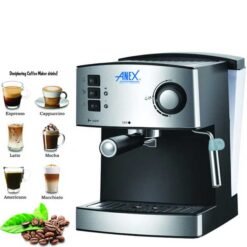
Anex Coffee Maker — Prices in Pakistan, Models & Buying Guide
What you’ll find on this page (Pakistan-focused)
Looking for an Anex coffee maker in Pakistan? This category brings together Anex drip makers for everyday batch brewing and compact espresso machines for cappuccino and latte at home or in small offices. You’ll get clear guidance on which type fits your routine, practical capacity advice for Pakistani households, and how to assess features like pressure class, carafe design, and keep-warm plates. Live prices and availability appear on individual product cards; this guide helps you choose faster without guesswork.
If you’re buying in Karachi, Lahore, Islamabad/Rawalpindi—or ordering upcountry—stock, delivery timelines, and payment methods can differ by city and courier. Always check the product page for current price, warranty information, and what’s included in the box. Keep your invoice and warranty card safe; they’re essential if you ever need service.
Shop by Type
Drip Coffee Makers (simple, consistent, family-friendly)
Drip machines are ideal if you prefer straightforward, no-fuss coffee for multiple cups at once. They use ground coffee and a filter: water heats and drips through the grounds into a glass or thermal carafe. For Pakistani homes and staff rooms, drip makers shine because they brew enough for several people, keep the coffee warm on a hot plate, and don’t require advanced technique. They’re also friendlier to budgets, with fewer accessories to learn or maintain. If your morning routine involves serving family or colleagues quickly, drip is likely your best match.
When comparing Anex drip models, look at capacity (often shown as cups or liters), whether the filter is reusable or uses paper, and whether the hot plate has auto-shutoff. A reusable filter reduces ongoing costs, which is handy when coffee consumption is daily. If you entertain frequently or host guests after Jummah or on weekends, a 1.25-liter (~10 small cups) carafe helps avoid brewing back-to-back batches. For taste, freshly ground coffee elevates flavor, but pre-ground works fine for convenience.
Espresso & Cappuccino Machines (pressure-based milk drinks at home)
Espresso machines use pressure to force hot water through finely ground coffee, creating a concentrated shot with crema. Many home units are labeled in the “15-bar class,” which is more than enough for home espresso when paired with a suitable grind. These machines typically include a steam wand for frothing milk—great for cappuccino, latte, and mocha. If you love café-style drinks and don’t mind a short learning curve, an Anex espresso machine can be a rewarding choice for Karachi and Lahore households.
Before you decide, consider two practical factors: grind size and milk texture. Espresso needs a finer, consistent grind; if you’re using supermarket pre-ground, look for “espresso grind” on the pack, or consider a burr grinder for better results. For milk drinks, practice with chilled milk and a clean jug; aim to stretch (add microfoam) first, then roll the milk to integrate texture. Plan a little counter space for the machine, a tamper, and a knock box or bin for used pucks. If you host only occasionally or prefer simple black coffee, a drip maker may be more suitable and less maintenance.
Shop by Capacity
4–6 cups: Compact kitchens, hostels, and solo coffee lovers
If your kitchen space is tight or you’re furnishing a hostel room or studio, a smaller drip coffee maker is a sensible start. You’ll use less coffee per brew and waste fewer leftovers. These units warm up quickly and are easy to clean—handy when water pressure varies across Pakistani apartments. For solo or two-person households, 4–6 cups covers a morning round without hogging counter space or power sockets.
Think about mug sizes: many Pakistani households use larger mugs than the “small cup” used in appliance labels. If you pour into big mugs, 4–6 “cups” may translate to 2–3 mugs. To minimize bitterness when brewing smaller batches, use fresh water, keep the filter basket clean, and don’t leave brewed coffee on the hot plate for too long—transfer to a thermos if you’ll sip slowly.
8–10 cups: Families and staff rooms (balanced size)
For a family of four to six or a small office staff room, 8–10 cups hits the sweet spot. It’s large enough to serve a round without constant refills but still compact enough for most Pakistani countertops. Machines in this range often feature a 1.25-liter carafe, reusable filter baskets, and anti-drip valves so you can pour mid-brew. If your home sees frequent guests, this capacity reduces waiting time and keeps everyone topped up during breakfast or teatime.
Consider build details that improve daily use: a clear water window for accurate filling, a carafe handle that stays cool, and a hinged lid that opens fully under upper cabinets. If you’re in Karachi where mains water can be hard, a simple habit—using filtered or RO water—helps reduce scale and preserves taste. Plan a weekly quick clean and a monthly descale (more on maintenance later) to keep performance steady.
12 cups: Small offices and frequent hosts
If you routinely serve guests at home or run a small office, a 12-cup machine offers batch efficiency. It’s useful for Friday gatherings, team stand-ups, or client visits—brew once, pour multiple times. While it takes slightly longer to complete a full pot, the per-cup time is efficient, and you can pair it with a kettle for hot water if someone prefers tea. For offices on fluctuating voltage, choose models with a stable power rating and avoid sharing the socket with heavy appliances like microwaves or heaters simultaneously.
Larger carafes benefit from careful dosing: keep your coffee-to-water ratio consistent (a common starting point is roughly 1–2 tablespoons of ground coffee per “small cup,” then adjust to taste). If you find the last cups taste different, give the carafe a gentle swirl before pouring; it evens out strength and improves consistency, especially when serving many people back-to-back.
Quick cups-to-ml guide (helps decode labels)
Manufacturers often use “cups” that are smaller than typical Pakistani mugs. As a handy translation: 1.25 liters ≈ ~10 small cups. If your household prefers large mugs, treat “10 cups” as closer to 5–6 mugs. When in doubt, check the liter figure on the product page, not just “cup” count, and match it to your family’s actual serving size.
Popular Anex Models (What to check before you buy)
Competitor pages often push a single espresso model (AG-825) with wattage and “15–20 bar” claims but give little help comparing across the range. Here, we summarise three popular Anex options—one drip and two espresso—so you can quickly decide which suits your home, office, or café-starter setup.
Tip: Treat any specs on third-party sites as indicative only. Always verify capacity, pressure class, wattage, accessories, and warranty on the actual product page before checkout.
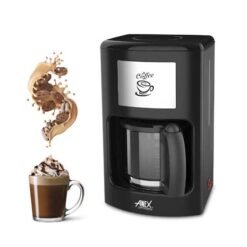
Anex AG-811 (Drip) — Everyday batch brewing for families/staff rooms
If your priority is straightforward, reliable coffee for multiple people, the AG-811 drip coffee maker is a practical fit. Drip brewing is forgiving and consistent; you add ground coffee, fill the tank, and brew into a glass carafe—great for Pakistani homes where several cups are poured at breakfast or for staff rooms where people share a pot. Many AG-811 listings emphasise ease of use and capacity (often in the 1-liter+ range). For Karachi/Lahore households, a reusable filter reduces ongoing cost and waste versus paper filters.
What to check on the product page: capacity in liters and “cups”; keep-warm hot plate and auto shut-off behaviour; filter type (reusable vs paper) and anti-drip for mid-brew pours; warranty terms and what the card/invoice must show to claim locally in Pakistan.
Use-case fit: families of 4–6, hostels, and small offices wanting simple black coffee. If your searches look like “anex drip coffee maker pakistan” or “anex coffee maker 10 cups (1.25 liter)”, this is your lane.
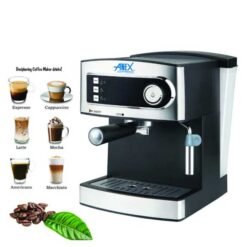
Anex AG-825 (Espresso) — Entry espresso with steam wand for cappuccinos
AG-825 is a popular home espresso pick because it promises café-style milk drinks without a big learning curve. It typically includes a steam wand for frothing, and many listings highlight pressure class (home machines commonly advertise ~15-bar class) with wattage tuned for 220–240V. For “anex espresso machine 15 bar pakistan” and “anex cappuccino machine price in pakistan” searches, this model is often the first you’ll see—but compare carefully.
What to check on the product page: actual pressure spec (don’t rely purely on headlines elsewhere), wattage, and heat-up time; basket type (pressurised vs non-pressurised) and included tamper; steam wand angle and milk jug inclusion (sometimes sold separately); warranty specifics and any included accessories (filters, scoop, etc.).
Use-case fit: newcomers to home espresso who want cappuccino/latte most days, accept some practice with grind size and milk texturing, and have counter space for the machine plus basic accessories.
Anex AG-826 (Espresso) — Espresso capability with beginner-friendly controls
AG-826 sits in a similar bracket to the AG-825 with small differences by listing (control layout, accessories, and sometimes basket and wand details). If you’re searching “anex ag-826 espresso machine price pakistan”, compare product photos and the accessory list carefully; even small differences (steam knob vs toggle, cup clearance, drip tray depth) can affect day-to-day use in tight Pakistani kitchens.
What to check on the product page: portafilter size and basket options (single/double); cup height under the spouts (for your favourite mug); water tank access (top vs back) if the machine sits under cabinets; warranty card and coverage; keep your invoice and stamped card.
Use-case fit: milk-drink-first homes that want a straightforward control scheme and prefer a model that fits under cabinets with minimal movement.
Quick Comparison (feature cues to verify on each product card)
| Model | Type | Capacity cue | Pressure class cue | Milk frother | Good for | What to verify on the product page |
|---|---|---|---|---|---|---|
| AG-811 | Drip | Often around 1.25L “10 cups” | N/A (gravity drip) | N/A | Families, staff rooms, hosting | Exact capacity, reusable filter, hot plate & auto-off, anti-drip, warranty |
| AG-825 | Espresso | Single/Double shots | Home-use class (commonly marketed ~15-bar) | Steam wand | Cappuccino/latte at home | Stated pressure, basket type, wattage, included accessories, warranty |
| AG-826 | Espresso | Single/Double shots | Home-use class (commonly marketed ~15-bar) | Steam wand | Daily milk drinks, compact counters | Cup clearance, tank access, wand angle, included accessories, warranty |
Prices & Deals in Pakistan
What affects the “Anex coffee maker price in Pakistan”
Pricing for Anex coffee maker models varies by type (drip vs espresso), build (carafe and housing), pressure class (for espresso), wattage, included accessories, and warranty. City-level factors and import cycles can also influence availability and delivery cost—Karachi may show better stock depth; upcountry delivery can add courier fees. Always confirm final price on the product page at checkout time.
If you’re comparing listings like “anex coffee machine price in pakistan”, focus on like-for-like: the same model code (AG-811 vs AG-825 vs AG-826), same warranty, and same included items. A bundle that includes a milk jug, filters, or a descaling pack may be priced higher but could save you a second purchase later.
Typical price guidance (without fixed figures)
Drip makers (e.g., AG-811) generally cost less than espresso machines, making them the budget-friendly option for families and offices needing multiple cups quickly. Shoppers searching “anex drip coffee maker pakistan” and “anex coffee maker 10 cups (1.25 liter)” usually end up here.
Espresso machines (e.g., AG-825/AG-826) cost more due to pumps, heating elements, and steam systems; they suit “anex cappuccino machine price in pakistan” and “anex espresso machine 15 bar pakistan” queries where milk drinks are primary.
Warranty can influence value. Many Anex appliances sold in Pakistan are advertised with up to 2-year warranties; confirm the coverage for your specific model, keep the stamped warranty card, and save the invoice. (We detail warranty steps later.)
City & channel: Buying online in Pakistan vs visiting stores in Karachi or Lahore may show small differences based on courier, cash-on-delivery policies, or showroom promos.
How to spot real deals (Ramzan, Eid, 11.11, year-end)
- Check model codes: A big “% off” on a different model (AG-8xx vs AG-81x) isn’t a like-for-like price cut.
- Confirm warranty: Ensure the discount doesn’t come at the cost of official warranty. Verify the warranty card requirement on the product page before purchasing.
- Look at accessories: Some promos remove accessories (milk jug, extra basket) to show a lower sticker price; add-on costs can erase the “deal.”
- Delivery timing: Event sales can introduce courier backlogs upcountry. If you need the machine before guests arrive, factor delivery estimates.
- Returns & support: Deals should still honour return windows and support. Keep the invoice email/SMS, especially if ordering from marketplaces or via COD confirmation flows.
Bottom line: For “anex ag-811 price in pakistan”, “anex ag-826 espresso machine price pakistan”, or any “Anex coffee machine price in Pakistan” query, verify live price and warranty on the product card right before checkout. It’s normal for price to vary by stock, model, and city; our role here is to help you choose the right type and capacity first, then buy confidently.
How to Choose the Right Anex Coffee Maker (Buying Guide)
Your use-case first: people, drinks, and routine
Start by mapping your daily routine. If your household in Pakistan serves several cups back-to-back each morning, a drip coffee maker is the simplest way to keep everyone supplied without learning barista skills. A 1.25-liter (~10 small cups) carafe typically covers a family of 4–6 or a small staff room, and the keep-warm plate helps during breakfast rushes. If you entertain guests at home—especially on weekends or Eid—larger drip capacities keep you from brewing multiple batches and let you focus on serving.
If you mainly crave cappuccino or latte, consider an espresso machine. You’ll learn two basic skills: dialing in the grind and texturing milk. For Karachi and Lahore kitchens where counter space is tight, check cup clearance and tank access so you’re not pulling the machine out each time. If you only occasionally drink milk coffees but still like strong flavor, a drip machine plus a darker roast can be a more budget-friendly path than buying an espresso unit you rarely use.
Kitchen & power considerations in Pakistan
Most home appliances here run on 220–240V. Espresso machines typically have higher wattage than drip makers, so avoid sharing their socket with heavy appliances like microwaves or heaters. If your area experiences voltage dips, a dedicated outlet and a stable power strip (with proper rating) reduce nuisance trips. For apartments with tight counters, measure cabinet height: some espresso models load water from the top, which needs extra clearance.
Water quality matters. Karachi and parts of Lahore have harder water; scale builds up faster and can affect taste and machine longevity. Use filtered/RO water where possible and descale on a schedule. Keep the machine dry after use—especially around the steam wand and drip tray—to prevent corrosion or residue. Finally, plan where accessories live (tamper, milk jug, knock box) so the counter stays tidy and quick to reset for the next brew.
Maintenance & consumables
Drip machines are low maintenance: rinse the reusable filter after each brew, wipe the hot plate, and deep-clean the carafe weekly. Descale monthly if you use hard water (or every 6–8 weeks with filtered water). Espresso units need a bit more TLC—purge and wipe the steam wand after every milk session, back-flush if the model/basket type supports it, and empty the drip tray daily. A simple microfibre cloth and a small brush keep the group area clean.
Consumables to consider include ground coffee (choose medium grind for drip, fine/espresso grind for espresso), paper filters if your model needs them, and a basic descaling solution. If you’re starting espresso, a consistent grinder is the single best upgrade—pre-ground works in a pinch, but a burr grinder improves flavor and repeatability. Avoid harsh cleaners or abrasive pads; they can damage finishes and may void warranty. Build a simple habit: clean little, but often—your coffee will taste better and your machine will last longer.
Warranty & After-Sales Support
Understanding “up to 2-year” claims (and avoiding surprises)
You’ll often see appliances in Pakistan advertised with up to 2-year warranty language. Treat this as a starting point—verify the exact coverage for your specific model on the product page before buying. Keep the stamped warranty card and original invoice; both are typically required for claims. Warranty usually covers manufacturing defects, not wear-and-tear or issues caused by misuse, poor water quality, or unauthorised repairs.
For espresso machines, scale and milk residue are common causes of service visits. Most warranties consider scale and residue a maintenance matter. Following the cleaning and descaling practices above reduces the risk of out-of-warranty repairs. If you change cities (e.g., Karachi → Lahore), confirm which service center handles your model; policies and lead times can vary by city and by authorised partner.
How to claim warranty in Pakistan (practical steps)
- Keep documentation: invoice (printed or e-receipt), stamped warranty card, and the box/accessories if possible.
- Describe the issue clearly: note any error lights, unusual noises, or leaks and when they happen (during brew, steam, or idle).
- Contact support via the channel listed on your product page or invoice; share model code, purchase date, and a short video if requested.
- Service assessment: the product may be inspected by a technician; repair/replacement timelines vary by city and parts availability.
- Post-service check: once returned, run a water-only cycle (drip) or blank shot (espresso) to confirm normal operation.
During peak seasons (Ramzan, 11.11, year-end), expect slower turnaround due to higher volumes. Back up your claim with dates and ticket/complaint numbers. When shipping a unit upcountry for service, pack the carafe/portafilter carefully; damage in transit typically isn’t covered.
Delivery & Payment (store-policy aware)
Delivery timelines across Pakistan
For Karachi addresses, same-city deliveries can be faster; upcountry shipments to Lahore, Islamabad/Rawalpindi, Faisalabad, Multan, and Peshawar depend on courier networks and service type. If you’re buying ahead of an event or guests arriving, buffer a few extra days around national holidays and sale events. Confirm delivery charges and whether fragile handling is used for glass carafes; a well-padded box and intact carafe seal are important on arrival.
A practical tip for receiving: unbox near the courier if feasible, or record a short unboxing video as you open the parcel. This helps document the condition of the carafe and machine if there’s any transit damage. Check that the model code matches your order (AG-811 vs AG-825/AG-826), the power cord is intact, and accessories listed on the product page are present. If anything’s missing, contact support immediately with photos.
Payment methods and buying safely online
Availability of Cash on Delivery (COD), card payments, or bank transfers can vary by city and order size. Check the checkout page for accepted methods and any COD limits for higher-value espresso machines. If you’re comparing sellers (including marketplaces), weigh return windows, shipping fees, and whether the product includes an official warranty—a lower price without proper warranty or accessories may cost more later.
For anex coffee maker online pakistan searches, always verify the final price at checkout (including delivery) and read the “what’s in the box” section so you don’t miss a milk jug, filter, or scoop you assumed was included. If you’re in Karachi or Lahore and prefer to inspect before buying, consider visiting a showroom to get a feel for size and noise level—then complete the purchase online if delivery is more convenient. Keep the invoice SMS/email safe; it’s essential for claims or returns.
FAQs
Is 15-bar enough for espresso at home?
Yes. Home machines commonly advertise around 15-bar class and can produce solid espresso with the right grind and tamp. The bigger variable is grind consistency and freshness—use an espresso grind (or a burr grinder) for best results.
Which Anex model is best for cappuccino at entry level?
Both AG-825 and AG-826 include steam wands suited to frothing milk. Compare basket type, wand angle, and included accessories on the product page. If you value simpler controls and cup clearance under cabinets, AG-826 listings often emphasise those conveniences.
Does a 1.25-liter (≈10 small cups) drip machine suit a family of 4–6?
Usually, yes—especially if you brew once in the morning and let the hot plate maintain temperature for refills. If you serve guests often or use large mugs, consider a larger carafe or brew a second batch.
How often should I descale in Karachi/Lahore water?
With hard water, plan a basic descale roughly once a month for daily use. If using filtered/RO water, extend to every 6–8 weeks. Always follow your product’s instructions and avoid abrasive cleaners.
Do Anex coffee makers come with 2-year warranty in Pakistan?
Many Anex appliances are advertised with up to 2-year warranty. Confirm your model’s coverage on its product page, keep the stamped warranty card, and save the invoice—these are typically required for claims.
What’s the difference between AG-825 and AG-826 for beginners?
Expect small but meaningful differences like steam control style, cup clearance, tank access, and accessory bundle. Check the product photos and description to see which layout matches your kitchen space and habits.
Can I use pre-ground coffee?
Yes. For drip, choose a medium grind; for espresso, look for “espresso grind.” You’ll get better results with a burr grinder, but pre-ground works—especially if you value convenience.
My glass carafe broke—what should I do?
Check the product page for compatible replacement carafes or contact support with your model code. Measure capacity (liters) and match the carafe style (shape, lid) to avoid leaks or poor fit.
Are espresso machines noisy?
They make some pump noise and hiss when steaming. If noise is a concern, place the machine on a stable surface, and avoid brewing late at night in rooms next to bedrooms.
Will using a higher wattage machine increase my bill a lot?
Espresso machines typically draw more power than drip makers but run for shorter bursts. Actual impact depends on your usage pattern. If you brew multiple lattes daily, expect higher consumption versus a single morning drip pot.
Yes. Home machines commonly advertise around 15-bar class and can produce solid espresso with the right grind and tamp. The bigger variable is grind consistency and freshness—use an espresso grind (or a burr grinder) for best results.Both AG-825 and AG-826 include steam wands suited to frothing milk. Compare basket type, wand angle, and included accessories on the product page. If you value simpler controls and cup clearance under cabinets, AG-826 listings often emphasise those conveniences.Usually, yes—especially if you brew once in the morning and let the hot plate maintain temperature for refills. If you serve guests often or use large mugs, consider a larger carafe or brew a second batch.With hard water, plan a basic descale roughly once a month for daily use. If using filtered/RO water, extend to every 6–8 weeks. Always follow your product’s instructions and avoid abrasive cleaners.Many Anex appliances are advertised with up to 2-year warranty. Confirm your model’s coverage on its product page, keep the stamped warranty card, and save the invoice—these are typically required for claims.Expect small but meaningful differences like steam control style, cup clearance, tank access, and accessory bundle. Check the product photos and description to see which layout matches your kitchen space and habits.Yes. For drip, choose a medium grind; for espresso, look for “espresso grind.” You’ll get better results with a burr grinder, but pre-ground works—especially if you value convenience.Check the product page for compatible replacement carafes or contact support with your model code. Measure capacity (liters) and match the carafe style (shape, lid) to avoid leaks or poor fit.They make some pump noise and hiss when steaming. If noise is a concern, place the machine on a stable surface, and avoid brewing late at night in rooms next to bedrooms.Espresso machines typically draw more power than drip makers but run for shorter bursts. Actual impact depends on your usage pattern. If you brew multiple lattes daily, expect higher consumption versus a single morning drip pot.
