



Home Appliances

Philips Humidifier in Pakistan
Dry winter air, gas heaters, and dust can make rooms feel uncomfortable—especially in Karachi, Lahore, and Islamabad when humidity dips. This category page is your practical guide to Philips humidifiers: how to pick the right size for your space, what affects the Philips humidifier price in Pakistan, and how to shop with confidence. You’ll also find local buying tips, filter availability advice, and notes on warranty and after-sales support from Emirates Electronics in Karachi.
Shop Philips Humidifiers (by Room Size & Use)
Quick picker (Small | Medium | Large rooms)
For most homes and offices in Pakistan, sizing by room area is the simplest path to comfort. If your room is small (up to ~15 m²)—think nursery, home office, or a compact bedroom—look for compact models that are easy to refill and quiet enough to run overnight. Medium rooms (~15–30 m²), like master bedrooms or living rooms in apartments, benefit from larger tanks and steady output to maintain comfort through heater season. Large spaces (30 m²+)—open lounges or combined drawing/dining rooms—generally need higher output and smarter controls so you’re not constantly adjusting settings.
For a fast start, explore all current options on our Humidifiers category and then filter down to Philips.
Popular series & models
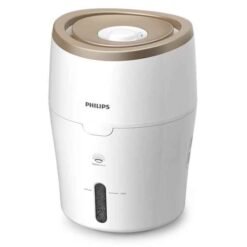
Shoppers commonly compare Philips HU4801, HU4803, HU4811, and the Philips 2000 Series humidifier. Treat model names as a shorthand for form factor and feature tiering: some prioritize simplicity and quietness; others add features like auto-humidity targets, night modes, or more refined airflow for even room coverage. When you browse, scan for tank size, ease of refilling, and whether the model uses a replaceable filter/wick—this affects both performance consistency and ongoing cost planning.
If you’re shopping specifically for Philips, jump straight into our Philips Humidifier brand shelf to see what’s in stock today. Note: We keep specs on each product page and avoid guessing—check each model tile for up-to-date features, stock and price. If you’re comparing across HU4801 vs HU4803 vs HU4811, prioritize the room size match first; features are easier to trade off than undersized performance.
For whom? (Baby rooms, allergy-prone users, and general family use)
For a baby room, quiet operation, simple maintenance, and steady moisture are the priorities. A compact Philips humidifier with a moderate tank is often enough for a nursery where doors are usually closed; check for night modes and easy-to-clean designs so routines stay realistic during busy weeks. Parents sometimes ask about “Philips humidifier for baby room”—the practical answer is: choose a model sized for the nursery, keep it clean weekly, and aim for comfort rather than chasing a specific number on the humidity dial.
For allergy-prone households or when winters feel extra dry from gas heaters, choose stability over gimmicks. Features like auto-humidity can prevent swings, while replaceable wicks/filters keep performance more predictable over months of use. If you already use an air purifier and are considering a Philips air purifier and humidifier combo, we cover that comparison later; for now, decide whether you need moisture only, or moisture plus filtration in the same footprint. Choosing right at the category level (size + routine maintenance) makes brand/model choices straightforward afterward.
Prices in Pakistan (What Affects Cost)
Typical price drivers
The Philips humidifier price in Pakistan depends on a few practical levers. Model/series is the first: compact entries with manual control sit lower, while units with larger tanks, auto-humidity targets, or more refined airflow usually price higher. Seasonal demand matters too—Pakistan’s dry months (often October–February) see faster stock movement, while shoulder seasons can bring better deals. Official warranty and filter/wick availability also influence total cost of ownership: a slightly pricier unit with easy-to-find genuine wicks may cost less over its lifetime than a cheaper unit with hard-to-source parts.
Tank design and maintenance are subtler price factors. Models that are easy to refill from a regular pitcher, have wide openings for cleaning, or support quick filter changes can save you time and reduce the risk of abandoning the routine mid-season. If load-shedding is a concern, look at rated power and low-mode options; even small differences can add up in homes that run units through most of the evening and night.
Live pricing (how to check today)
We don’t publish blanket numbers because stock and promotions change daily across Pakistan’s retail channels. To see today’s price, open the product tiles in our Humidifiers category or the Philips Humidifier shelf and compare what’s in stock right now. If you’re price-matching with marketplaces (e.g., “Philips humidifier Daraz”), always check seller authenticity and warranty handling—more on warranty below. If a specific query brought you here—“Philips HU4803 price in Pakistan,” “Philips HU4811 humidifier price,” or “Philips HU4801 price in Pakistan”—use the search bar or filters to jump to the model page and check the current PKR price, delivery cost to your city, and any live bundle offers.
If you’re price-sensitive, consider off-season buying (late spring to summer). Watch for bundle ideas if you also need a purifier or spare filters; even if you buy the humidifier now, setting aside a small budget for the Philips humidifier filter wick later in the season avoids last-minute rushes. If you’re comparing Philips NanoCloud humidifier models with ultrasonic models from other brands, remember to factor in consumables vs. distilled water preferences—your convenience often dictates the true cost more than a small difference in the sticker price.
Why Choose Philips Humidifiers
Evaporative NanoCloud, explained simply
If you’ve been comparing “cool mist” and “ultrasonic” models, Philips’ evaporative approach—often described under the NanoCloud umbrella—is designed to release moisture as an invisible, fine vapor without heating water. Air is drawn through a moist filter or wick, picks up water at room temperature, and then carries that humidity back into your room. Because the vapor is not a visible stream, you’re less likely to see wet patches on nearby furniture when the unit is placed correctly, and you won’t feel that sudden “cold plume” some people notice with certain ultrasonic devices. In everyday use, this means the room’s moisture level tends to rise more evenly and feels natural rather than “damp.”
A practical benefit of evaporative designs is how they handle typical Pakistani tap water. Mineral content varies across cities like Karachi, Lahore, and Islamabad, and ultrasonic units can sometimes produce a faint white dust when minerals become airborne; evaporative systems generally keep those minerals on the wick. You still need to clean and replace consumables on schedule, but the day-to-day experience is simpler for many households. If you run a gas heater in winter, the steady, room-temperature output helps counter dryness without making the room feel chilly. For users focusing on comfort and routine, this “set-and-forget” stability is often the main reason to choose Philips.
Hygiene and maintenance that fit real life
Humidifiers work best when they’re easy to keep clean. Philips models that use a filter/wick make maintenance straightforward: rinse the tank weekly, give parts a gentle clean, and replace the wick when it’s past its best. This cadence depends on use and air quality—homes near busy roads or with construction dust may need more frequent attention than a sealed, minimally dusty apartment. The important part is predictability: when cleaning takes minutes instead of an hour, you actually stick to the routine, and the device keeps performing consistently through the whole season.
From a budget angle, plan for consumables like you plan for printer paper or water filters. Stock one spare humidifier filter wick for the season so you’re never caught out mid-winter. When shopping, confirm that your chosen model’s wicks are readily available in Pakistan and keep the product code handy. A good habit is to mark your calendar when you first install a new wick, then assess after a few months of use; if the home feels less comfortable at the same settings or airflow seems restricted, it’s usually time to replace. This small planning step keeps the total cost of ownership under control and avoids impulse replacements during peak demand months.
Quiet, night-friendly operation
Night comfort hinges on two things: sound level and light. Many Philips humidifiers are tuned for low-noise operation on their gentler settings, which is what you’ll use overnight in bedrooms and nurseries. Instead of chasing the maximum output, focus on the lowest comfortable setting that keeps the room from feeling dry by morning. This reduces noise, extends tank life, and makes sleep more restful for light sleepers. If the unit has a night mode, that’s typically the easiest way to set it and forget it till morning.
Placement is the other half of quiet comfort. Avoid hard surfaces that reflect vibration (like hollow cupboards) and keep the unit on a stable, flat spot a little away from the bed’s headboard. In rooms with ceiling fans, a slow fan speed helps diffuse moisture without blasting air directly at the device. If you’re using an air purifier nearby, leave some space between the two so they don’t “compete” for airflow; think of creating a gentle circulation loop rather than a jet stream. These small setup tweaks often make more difference than any single spec number on a box.
How to Choose the Right Model (Pakistan-specific)
Match room size and climate, not just features
Start with the room’s area and how you actually use the space. In compact bedrooms or home offices (up to ~15 m²), a smaller Philips model with steady output is usually sufficient; doors are often closed, so humidity builds up efficiently on low settings. For medium rooms (~15–30 m²) such as master bedrooms or lounge-dining combos, look for larger tanks and a control mode that can maintain a target level without frequent manual tweaks. Large or open-plan spaces (30 m²+) require more airflow and capacity; otherwise, you’ll find yourself refilling often and running the unit on high—neither of which is ideal for quiet evenings.
Climate matters across Pakistan’s regions. Karachi is coastal and can feel muggy in monsoon; you may use a humidifier primarily in the drier months and switch off when ambient humidity rises. Lahore and Islamabad see more pronounced winter dryness; if you use gas heaters at night, a humidifier makes bedrooms and baby rooms more comfortable. In Quetta and other cooler, drier areas, overnight use throughout winter is common. The takeaway: size for your dry-season needs, and be willing to reduce or pause use during humid spells to avoid condensation on windows or that “heavy” air feeling.
Feature checklist you’ll actually use
After sizing, pick only the features that simplify your routine. Auto-humidity control (sometimes shown as target levels) helps maintain consistency through the night without over-humidifying a closed room. Tank design matters more than you think: a wide opening that’s easy to carry to the sink encourages weekly cleaning, keeps the water fresher, and reduces the risk of scale build-up. Refill access from the top is convenient if the unit lives on a console or side table; bottom-fill is fine if you’re comfortable carrying the tank to the tap.
Other helpful features depend on your household. Night mode or screen dimming keeps light to a minimum in baby rooms. Filter/wick availability in Pakistan should be confirmed before purchase; note the model code for future reorders. If you use a UPS or generator during load-shedding, check the rated wattage and make sure the plug and cord length fit your setup without creating tripping hazards. Think about cleaning, too: smooth surfaces, fewer nooks, and clear access make it easier to wipe down parts and maintain hygiene. Choosing essentials you’ll use every day beats paying for complex options that don’t fit your routine.
Electricity, noise, and placement for Pakistan homes
Power stability varies by neighborhood. A Philips humidifier with modest power draw on low settings pairs well with evening use during peak tariff hours and runs comfortably overnight without stressing a UPS. If you live in an apartment with thin walls, prioritize lower steady settings rather than cycling the device between high and off; your neighbors—and your sleep—will thank you. For homes with marble or tile floors, placing the unit on a small mat can reduce micro-vibrations and keep it quieter.
Placement is about airflow and common sense. Keep a little distance from curtains and wood furniture to prevent localized dampness, and avoid pointing the outlet directly at walls. In air-conditioned rooms, start with a lower humidity target; AC will already be drying the air, so over-humidifying can lead to condensation on cold surfaces. In monsoon months, pause use or lower your target even further—comfort is the goal, not a fixed number. If the room already feels “clammy,” a humidifier isn’t the right tool that day; consider ventilation or, if persistent, a dehumidifier instead once the season shifts.
Maintenance & Genuine Parts (Pakistan Availability)
Filter/wick replacement (plan it like a consumable)
Most Philips humidifiers use a replaceable filter/wick. Its job is to absorb water and let your room air pick up clean moisture as it passes through—so performance is closely tied to the wick’s condition. In normal Pakistani homes, dust, construction debris, and tap-water minerals slowly load the wick. As that builds up, you’ll notice reduced airflow, weaker humidification at the same setting, or a musty smell if cleaning is skipped. Those are your signals to replace. Some competitor pages mention “around 6 months” as a rough interval, but they also note it depends on air quality and usage—a realistic way to think about it. Treat 6 months as a planning anchor, then adjust based on your home.
Cleaning routine (weekly rinse, monthly deep clean)
A simple routine keeps your humidifier efficient and hygienic through the season. Weekly, empty the tank, rinse with fresh water, and wipe accessible surfaces with a clean cloth. If the tank has a wide opening, use a soft microfiber cloth to reach corners—avoid abrasive pads that scratch plastic. For monthly deep cleaning, soak the tank and tray parts (if removable) in a mild solution recommended by your manual, then rinse thoroughly and air-dry. Where water is hard (many areas of Lahore and Karachi), a brief de-scaling soak helps loosen mineral film—again, stick to the instructions provided on the model’s product page or manual. When in doubt, gentler is better; harsh chemicals can damage seals and plastics.
A quick three-point checklist keeps things on track:
- Fresh water daily if you’re running the unit nightly—stagnant water is the enemy of freshness.
- Wick check during refills—if it looks dark, brittle, or smells off, it’s time to replace.
- Airflow path clear—don’t block the outlet with curtains or push the back against a wall.
How to spot original parts (and avoid counterfeits)
When buying a Philips humidifier filter/wick in Pakistan, confirm the exact model code first. Genuine parts typically have consistent packaging, correct branding, and clean printing on labels. Be cautious of generic “fits Philips” claims without a clear part number. Ask the seller to confirm invoice + warranty support and keep a copy of your purchase for future claims. If you shop marketplaces, prefer verified stores over anonymous third-party listings; prices that look “too good” often come with quality or warranty trade-offs. Where possible, align the replacement filter price with a trusted retailer so you’re not scrambling mid-season or tempted by questionable stock.
A practical approach is to build a tiny “care kit” drawer: spare wick, soft cloth, a small bottle of your preferred cleaning solution, and a marker to date replacements. This keeps the habit easy, which is ultimately what preserves both comfort and longevity. If you ever switch models or series (e.g., to a different Philips 2000 Series humidifier), retire any leftover wicks that don’t match—mixing parts can reduce performance or cause leaks.
Official Warranty & After-Sales (Pakistan)
What’s usually covered (and what varies by model)
Philips humidifiers sold via authorized channels in Pakistan generally come with manufacturer warranty terms that vary by model and series. Coverage typically addresses defects in materials or workmanship for the unit itself; consumables like filters/wicks are usually excluded as they’re wear items. Because terms can change and different models in the Philips range carry different durations, we don’t publish one blanket number on this page. Instead, check the specific product page at the time of purchase for the latest warranty window and any registration requirements. This avoids confusion and ensures you’re reading the policy that applies to your exact unit, not a similar one.
Competitor pages often emphasize smart features, hygiene claims, and tank capacity, but they seldom make the Pakistan warranty process clear. We fill that gap by laying out the steps below, so you know exactly how to proceed if you ever need service. If you’re comparing a marketplace deal vs. an authorized seller, remember that a clean warranty trail (invoice + serial verification + seller stamp) is what actually protects you after the first few months—not a small price difference.
How to claim (step-by-step in Karachi & nationwide)
1) Keep your invoice from purchase day. For online orders, save the digital invoice PDF and the order confirmation email.
2) Record the serial number from the unit’s label; a quick phone photo helps.
3) Contact Emirates Electronics (authorized seller): Name: Emirates Electronics; Phone/WhatsApp: 0339 2009000; Address: Office No 206, 2nd Floor, Seema Electronics Centre, Abdullah Haroon Road, Saddar, Karachi. We’ll guide you on whether the case is handled in-store, via courier pickup, or via an authorized service partner. Bring/send the unit, original box (if available), invoice, and serial photo. For out-of-Karachi customers, we coordinate courier steps so you don’t have to guess the process.
If you purchased from a marketplace (e.g., you searched “Philips humidifier Daraz”), check whether the seller is official/verified and whether they provide a proper tax invoice and serial verification. If they do, we can still advise you about service flows; if not, warranty handling may be slower or require extra verification. When in doubt, share a photo of your invoice and the listing link with our team; we’ll advise on next steps promptly.
Buying channels (authorized site vs marketplaces)
Buying directly from an authorized retailer like emirateselectronics.pk simplifies warranty and after-sales—your invoice is already in the system, and serial verification is straightforward. You’ll also get clearer guidance on replacement filter availability in Pakistan, which matters a lot for humidifiers you’ll run nightly in winter. Marketplaces can be convenient for price checks, but make sure the storefront identity is transparent, the listing clearly states original Philips warranty in Pakistan, and customer service responses are timely.
If you’re assembling a larger home comfort setup (humidifier + air purifier), consider bundle quotes to sort accessories and wicks early. This avoids last-minute rushes when seasonal demand spikes and helps you match delivery windows with your schedule. Whether you buy online or in-store, the sanity check is the same: clear warranty terms for your exact model, proper invoice, and accessible support if you need it later. That’s what keeps the experience smooth long after unboxing.
Humidifier vs Air Purifier vs Combo
When you need a humidifier
Choose a humidifier when the air feels dry—typical in Pakistan during heater season—and you notice dry throat, static, or irritated skin. A humidifier adds moisture back to the room, helping evenings feel comfortable without overheating. If you primarily need moisture and already ventilate the room well, a dedicated humidifier is the simplest, most cost-effective choice.
When you need an air purifier
If your priority is reducing dust, smoke, or pollen, start with an air purifier. It won’t add moisture, but it can make breathing feel easier during smoggy days or in homes with pets. Browse our Air Purifiers category to compare options across brands, then narrow to Philips if you prefer that ecosystem.
When you need both (combo)
Some households benefit from both moisture and filtration—especially during pollution season when heaters also dry indoor air. A combined setup can mean one device that does both, or two compact devices working together. If you prefer to stay within the Philips lineup, see our Philips Air Purifier shelf for compatible purifier options, then choose a humidifier sized for your room. Keep a little distance between devices so airflow isn’t competing.
When to consider a dehumidifier
In monsoon or persistently damp rooms, a humidifier isn’t the right tool. If window panes sweat, walls feel clammy, or closets smell musty, consider a Dehumidifier instead. It removes excess moisture and keeps indoor air from feeling heavy. Many homes in coastal Karachi run a dehumidifier in monsoon and a humidifier in winter—switching tools with the season rather than forcing one device to do it all.
FAQs
What is the Philips humidifier price in Pakistan?
Prices vary by model and current stock. Open the product tiles in our Humidifiers category to see today’s PKR pricing, delivery options to your city, and any live promotions.
What is NanoCloud and how is it different from ultrasonic?
NanoCloud is Philips’ evaporative approach that releases invisible, room-temperature moisture. Minerals tend to stay on the wick, and the output disperses more evenly—useful for steady comfort without visible plumes. Ultrasonic models create a visible mist via vibrations; your choice comes down to maintenance preferences and room setup.
Which Philips humidifier is best for a baby room?
Choose a quiet model sized for the nursery, with an easy-to-clean tank and a night or low mode. Focus on comfort and routine rather than hitting a precise number on a humidity dial.
Do I need a filter/wick? How often to replace?
Most Philips models use a filter/wick. Replacement depends on air quality and usage; plan around several months of nightly use, then adjust based on performance and cleanliness.
Is there an air purifier + humidifier combo?
Yes, some models combine functions. Decide based on room size, layout, and whether you prefer a single device or two compact units that you can position for optimal airflow.
Do you offer original Philips warranty in Pakistan?
Yes—buying from authorized channels keeps warranty simple. Keep your invoice and serial number, and contact Emirates Electronics for assistance if you ever need service.
Prices vary by model and current stock. Open the product tiles in our Humidifiers category to see today’s PKR pricing, delivery options to your city, and any live promotions.
NanoCloud is Philips’ evaporative approach that releases invisible, room-temperature moisture. Minerals tend to stay on the wick, and the output disperses more evenly—useful for steady comfort without visible plumes. Ultrasonic models create a visible mist via vibrations; your choice comes down to maintenance preferences and room setup.
Choose a quiet model sized for the nursery, with an easy-to-clean tank and a night or low mode. Focus on comfort and routine rather than hitting a precise number on a humidity dial.Most Philips models use a filter/wick. Replacement depends on air quality and usage; plan around several months of nightly use, then adjust based on performance and cleanliness.Yes, some models combine functions. Decide based on room size, layout, and whether you prefer a single device or two compact units that you can position for optimal airflow.Yes—buying from authorized channels keeps warranty simple. Keep your invoice and serial number, and contact Emirates Electronics for assistance if you ever need service.
