

Baby Bottle Warmer
Showing all 2 resultsSorted by latest
-
Baby Bottle Warmer, Baby Care, Health & Beauty
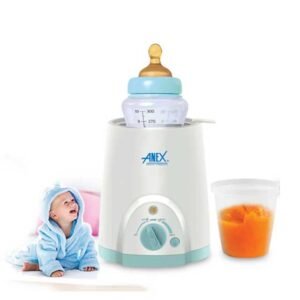
Anex Deluxe Baby Bottle Warmer AG-732
0 out of 5(0)- 220-240V
- 50/60Hz
- 150W
- Keep warm function 40-45 degrees centigrade.
- Adjustable temperature 40-100 degrees centigrade.
- Warming Basket and cover.
- Overheat protection.
- PTC heating elements.
- Suitable for all baby standard bottle.
SKU: n/a -
Baby Bottle Warmer, Baby Care, Health & Beauty
Anex Deluxe Baby Bottle Warmer AG-733EX
0 out of 5(0)- 220-240V
- 50/60Hz
- 250W
- Expressly warming up baby milk & food.
- Efficient PTC heating technology.
- Continuously rotary controller.
- Heat retention function.
- Stainless steel water partition to avoid leak water.
- Simultaneous warming of 2 bottles.
- Practical warmer & warmer basket for bottles, nipples, tether, and small items placing.
- Auto shut off once sterilization is completed.
- High-quality thermostat for accurate & constant temperature.
- Energy saving easy cleaning.
- Two color-indicated lights to show the different processes.
SKU: n/a

Showing all 2 resultsSorted by latest
Baby Bottle Warmer in Pakistan — Shop Online at Emirates Electronics
Warming milk evenly, quickly, and safely matters — especially during late-night feeds or when you’re out and about. This category brings together practical options for every routine, from electric bottle warmers for home use to portable bottle warmers for travel and car rides across Pakistan. You’ll also find guidance on what actually affects warming time, how power sources (220–240V mains, 12V car, 5V USB) change performance, and what features are worth paying for. If you’re exploring beyond warmers, you can browse the broader baby range here: Baby Care.
Whether you’re searching by feature (e.g., electric bottle warmer Pakistan) or comparing baby bottle warmer price in Pakistan, the goal is simple: keep feeds predictable and safe while avoiding hot spots. Below, we explain each type with clear pros/cons, so you can pick a warmer that fits your bottle shapes (wide-neck vs standard), milk type (breast milk vs formula), and daily routine (home or travel). We’ll stay brand-agnostic and focus on what helps in real Pakistani contexts — like load-shedding realities, UPS/inverter considerations, and car-friendly power options.
Shop by Type
Electric water-bath warmers (home use)
Electric water-bath warmers are the classic home choice: they warm bottles by circulating heated water around the bottle for even, gentle results. Most models include simple controls (dial or buttons), a timer, and a keep-warm stage to maintain temperature for a short window. These are ideal for parents who want repeatable results with minimal guesswork and who primarily warm at home on 220–240V mains. Because heating is water-based rather than radiant, you’ll typically see fewer hot spots compared with microwaving, which helps preserve the quality of breast milk and reduces the need to re-mix.
Look for practical features that reduce mental load during night feeds: an audible alert when warming is done, automatic shut-off for safety, and a clear fill guide for different bottle sizes. If you often warm back-to-back bottles (twins, cluster feeding), choose a unit with a slightly higher wattage and a basket that fits your tallest bottle. Families in hard-water cities (e.g., Karachi) should pick models with accessible reservoirs so routine descaling is easy — that single choice keeps heating times consistent and the unit efficient over time.
Sterilizer + warmer combos
2-in-1 or combo units add sterilization to warming, reducing countertop clutter and giving you one base to manage bottles daily. They’re helpful if you want to sanitize teats and parts without buying a separate steam sterilizer. Combo devices can be worthwhile for newborn routines where bottle turnover is high and hygiene is a daily focus. If you’re short on space, one footprint for two jobs is a win; just confirm the basket size matches your bottle neck and height, especially for wide-neck designs commonly used in Pakistan.
Trade-offs: combo units may be pricier and slightly bulkier than a standard warmer. Some place sterilization performance first and warming second, so read the panel or manual to confirm warming presets (milk vs baby food vs defrost). If sterilization is only an occasional need, you might pair a simple, reliable warmer with a separate method (e.g., boiling water in a deep pan) and still keep total costs down — but if you sterilize daily, the combo can save time and hassle in the long run.
Portable / USB & car bottle warmers (on-the-go)
Portable warmers are designed for travel, late-night feeds away from the kitchen, or long drives between cities. You’ll see three power styles: (1) USB wraps that heat slowly using power banks, (2) 12V car warmers that plug into the vehicle socket, and (3) compact battery-style warmers. USB wraps commonly cite “5V/2A” compatibility; that’s a clue that they’re low-power options, best for maintaining warmth or very gradual heating, not rapid warming from fridge-cold. In reality, expect gentle warming and pair with insulation for better results.
For faster on-the-go results, look at 12V car bottle warmers or portable units with higher-watt internal batteries. They’re more capable of bringing chilled milk to feed-ready temperatures within a realistic window while you’re parked. Manage expectations: warm-up time depends on starting milk temperature, bottle volume, bottle material (glass vs plastic), and ambient conditions (e.g., a cool night with AC running). When traveling during load-shedding, a modest power bank with a USB wrap can hold temperature, but a car-socket solution will usually handle the heavy lifting more reliably — especially if you’re warming for twins or larger volumes.
Baby Bottle Warmer Price in Pakistan — What Affects Cost
When you compare baby bottle warmer price in Pakistan across brands and models, you’ll notice a wide range — and it’s not random. A few practical factors consistently move the price up or down. Use the quick breakdown below to predict where a specific model should sit, so you can tell if a deal is genuinely good or just headline hype.
Brand & build quality
Established nursery brands typically cost more because of higher-quality plastics, better temperature sensing, and stronger local warranty support. If you’re comparing well-known names (for example, premium international baby brands that are popular in Pakistan) against generic imports, expect the premium unit to be pricier but also more consistent bottle-to-bottle. That price gap often buys tighter temperature control, clearer instructions, and safer auto shut-off behavior — features that matter at 2 a.m. when “simple and predictable” beats “fussy and finicky.”
Materials also play a role. Warmer bodies with thicker, BPA-free plastics and sturdier baskets tend to last longer and keep heat more even. Glass or stainless accessories (where included) can push the cost up slightly but improve durability and cleaning. If you’re buying for daily use (newborns, twins), the small premium for a stronger build often pays back in reliability.
Feature set (more presets ≈ higher price)
- Gentle vs fast warming: “Gentle” cycles reduce hot spots and help preserve milk quality; “fast” cycles save minutes but need good sensors to avoid overheating — that’s where better brands justify their price.
- Food-jar support: Baskets/adapters that fit small jars increase versatility (and cost) compared to bottle-only warmers.
- Auto shut-off & memory: Safety and convenience features add modestly to price but meaningfully to day-to-day ease.
Portability & power type (home vs travel)
Portability changes the entire cost equation. Electric bottle warmers for home use (mains power, 220–240V) are generally mid-priced and fastest for everyday routines. Portable bottle warmers Pakistan options (USB wraps, 12V car warmers, or battery units) vary widely. USB wraps that run on 5V/2A are usually the most affordable but warm slowly and work best for maintaining temperature rather than heating from fridge-cold — a nuance many spec lists don’t explain beyond “5V/2A compatible.”
12V car warmers and true battery-powered units cost more because they deliver more heat (and faster results) on the go. If travel feeds are frequent — or you often drive long Karachi↔Hyderabad or Lahore↔Islamabad trips — a 12V option can be worth the premium for realistic warm-up times in the car.
Local pricing realities (stock & promos)
Pakistan pricing shifts with import cycles, seasonal demand, and promotions. If you’re tracking a specific model, compare the feature set against the rest of this page to decide what a “fair” price band should be, then watch product cards for live deals. If a unit with limited presets is priced like a digital model with defrost and keep-warm, you’re paying feature-rich money for feature-light hardware — skip it and pick the better-equipped option instead.
How to Choose the Right Warmer (Pakistan-specific)
Bottle compatibility comes first
Warmers aren’t one-size-fits-all. Check for fit across three dimensions: neck type (standard vs wide-neck), height (tall bottles can “boo” the lid), and base width (some baskets are snug). If you use different brands at once (common when gifts mix with your original set), choose a basket that tolerates mixed shapes. A good test is whether the basket can securely hold a tall wide-neck bottle without tilting — if it rocks, hot spots are more likely. For baby food, confirm there’s a stable insert or jar stand so small containers don’t float and overheat.
If you’re moving between popular bottle shapes (e.g., transitioning from a wide-neck newborn bottle to a slimmer, anti-colic design), plan ahead. Pick a warmer that fits the largest bottle you expect to use; a bigger basket rarely hurts, but a too-small basket limits you within weeks.
Power realities in Pakistan (mains, UPS/inverter, car, USB)
- Home mains (220–240V): For most families, a standard electric water-bath warmer is the fastest, safest baseline. It’s predictable during nighttime feeds and easiest to repeat bottle-to-bottle.
- Load-shedding plan: If you have a UPS/inverter, a compact electric warmer usually runs fine due to modest wattage; still, check the rated watts before purchase. Without backup, keep a secondary travel method (insulated sleeve + pre-warmed water in a flask) ready for outages.
- Car (12V): Best for intercity travel. Warm while parked for safety, swirl before testing, and budget a few extra minutes on winter nights.
- USB (5V/2A wraps): Think “heat maintenance” or “very gradual warming,” not “rapid from fridge-cold.” Pair with insulation and realistic timing. The 5V/2A spec is a physics limit, not a brand flaw.
Feeding goals: breast milk vs formula, newborn vs older baby
Breast milk: Gentle, even warming protects quality. Look for warmers with presets that target body-adjacent temperatures and that circulate water rather than blasting heat directly. Avoid microwaving due to uneven heating and hot spots. If you freeze milk, “defrost” or “gentle thaw” functions reduce the risk of overheating the outer layer while the core is still icy.
Formula: Consistency and speed matter most. A warmer with a simple, repeatable cycle can make night feeds smoother than any multi-menu gadget. If you prepare multiple bottles, a slightly higher-watt home warmer (or one with a keep-warm stage) cuts downtime between feeds.
Newborn routines: Expect more frequent, smaller volumes — ideal for compact warmers with quick cycles. If twins are in the picture, prioritize a unit that rebounds fast for back-to-back bottles. For parents who split care across grandparents’ homes, a budget home warmer plus an inexpensive USB wrap for transport days can be smarter than one premium device that’s always in the wrong place.
Safety & ease-of-use checks you shouldn’t skip
- Auto shut-off: Prevents dry-boil accidents and is worth prioritizing over cosmetic extras.
- Visible fill lines: Clear water-level guides reduce guesswork and keep warming consistent across bottle sizes.
- Audible alert + simple controls: In the dark, one beep and a single button beat a cryptic screen.
- Cleaning access: Hard water in cities like Karachi can scale up reservoirs; choose designs with wide openings so monthly descaling is easy.
Still comparing? Browse the broader baby range to see complementary accessories and related categories here: Baby Care.
Usage & Care
Quick start: safe warming with no hot spots
Begin by filling the warmer’s reservoir to the indicated level for your bottle size, then place the bottle in the basket so it sits upright and stable. Select the appropriate setting (milk, food, or a gentle mode) and start the cycle; if your unit is a single-dial model, use the time guide in the manual and set a timer on your phone for consistency. When the cycle ends, swirl the bottle for 5–10 seconds to even out temperature gradients, then test a few drops on the inside of your wrist—aim for comfortably warm, not hot. If the milk still feels cool, run a short top-up cycle rather than jumping to a high-heat setting; gradual steps are safer and help prevent hot spots.
If you’re warming refrigerated breast milk, shorter, gentler cycles help preserve quality; for room-temperature formula, a standard cycle is usually enough. Avoid microwaving, because it can heat unevenly and create scalding pockets you can’t see. When warming baby food, use the jar adapter if included and avoid filling above the max line to prevent splashing. Keep a simple routine: same bottle size, same fill level, same setting—repeatable steps make night feeds smoother and reduce mistakes when you’re tired.
Cleaning & descaling (hard-water friendly)
Daily: empty the reservoir, wipe it dry, and leave the lid open so condensation doesn’t linger; this prevents stale odors and mineral rings. Weekly: wash the basket and accessories in warm soapy water, rinse thoroughly, and air-dry before reassembly. Monthly or as soon as you notice longer warm-up times: descale the reservoir. A common approach is a mild citric-acid or vinegar solution (check your manual for ratios), run a brief warm cycle, let it sit, then rinse twice with clean water. Descaling is especially important in hard-water cities like Karachi, where mineral buildup can slow heating and strain sensors.
Don’t forget the exterior: unplug first, then wipe with a slightly damp cloth and dry immediately; avoid harsh solvents that can fade markings or seep into seams. If your warmer includes a silicone ring or gasket, inspect it for wear and replace if cracked—leaks affect heating and safety. Parents who sterilize daily can pair their warmer with a dedicated unit for efficient hygiene; browse options here: Baby Bottle Sterilizer. For boiling water tasks (like prepping formula water separately), an electric kettle with auto shut-off is handy: Kettles.
Safety checks that matter every day
Always keep water above the minimum line before starting—running “dry” can damage heaters and trigger safety cutoffs. Place the warmer on a flat, away-from-edge surface, and route the cord so it can’t be pulled by curious hands. If your model has a keep-warm stage, treat it as a short buffer (for example, while burping or changing), not long-term storage; prolonged warming can affect milk quality. For car or USB use, stop the vehicle before handling hot containers and keep hot gear out of reach in the back seat to avoid spills while driving.
Replace bottles and teats at the first signs of fatigue (whitening, cracking, deformation), which can worsen hot spots and leaks. If you switch bottle brands or sizes, re-check fit in the basket; a snug, upright hold is safer and more even. Finally, build a quick “pre-flight” checklist—water level, cap tightness, timer ready, towel nearby—so even at 3 a.m., every feed feels controlled and predictable.
Travel & On-the-Go Solutions
Portable & USB warmers: realistic expectations and smart hacks
USB bottle warmers for baby in Pakistan are great for maintaining warmth or gentle top-ups, not rapid heating from fridge-cold. To get the most from a 5V/2A wrap, pre-warm the sleeve indoors for a few minutes, slide in a room-temperature bottle, and add an insulating layer (a simple fabric cover or the warmer’s own hood) to cut heat loss. If starting from chilled milk, plan extra time and swirl periodically; portable wraps heat slowly by design, which is better than uneven surges that can overheat the outer layer.
Build a small travel kit: the wrap, a fully charged power bank, a short high-quality cable, a microfiber towel, and a spare bottle. Keep the kit in a zip pouch so you’re never hunting for pieces at a petrol stop. For night feeds during load-shedding, a USB wrap can hold temperature while you prepare a fresh bottle with preboiled, cooled water from a flask. If you travel frequently between cities, consider upgrading to a higher-output portable unit or add a car-socket option for faster warm-ups when parked.
Car bottle warmers & heat retention tips
Car bottle warmers that plug into a 12V socket generally beat USB wraps for speed, especially on winter nights or when warming larger volumes. For safety, park the car, stabilize the bottle in the holder, and set a timer; driving while handling hot liquids is risky and can lead to spills. Remember that car cabins vary in temperature—running the AC can extend warm time, while a warm interior shortens it—so adjust expectations a few minutes either way. Swirl before testing on your wrist and consider a short top-up cycle if the bottle cooled while you settled the baby.
To keep milk warm longer, preheat the bottle by rinsing it with warm (not boiling) water before filling; this reduces the initial heat soak. Use an insulated sleeve on the bottle after warming, and shelter it from direct AC vents. For longer routes, carry a backup feed plan—either a second warmed bottle in an insulated pouch or a ready-to-mix formula portion—to avoid rushed reheats on bumpy roads. These simple habits turn the car warmer from a “maybe” gadget into a dependable part of your routine.
Warmer vs Alternatives
Warmer vs microwave
Microwaves are fast, but they heat unevenly and can create invisible hot spots—one sip might be cool while the next is too hot. Repeated microwaving can also degrade bottle materials over time, and it’s hard to set a repeatable routine when small timing changes produce large temperature swings. A dedicated milk warmer uses water-bath or controlled heating to spread heat evenly, which is gentler for breast milk and more predictable for formula feeds. If “consistency” is the goal at 2 a.m., a purpose-built warmer usually wins on safety and repeatability even if it’s not quite as fast as a microwave blast.
There is a place for the microwave—warming adult meals while you feed—but keep baby bottles out of it. If you must rewarm quickly and have no warmer available, a controlled hot-water bath in a deep mug is safer than a microwave. Still, a compact electric bottle warmer offers a safer default you can trust every night, with alarms and auto shut-off to reduce mental load.
Warmer vs hot-water bowl
A bowl of hot water is simple and cheap; for many families it’s the original method. The trade-off is control: water cools rapidly, so you may find yourself re-topping with hotter water, which risks overshooting. Bowls are also easier to spill, and it’s not always obvious when the milk core has reached an even, feed-safe temperature. A warmer gives you a repeatable cycle, a stable volume of heated water, and often a keep-warm buffer to handle a short delay without starting over.
If you stick with the bowl method as a backup, make it safer: use a deep, stable container on a wide surface; set a timer; swirl and wrist-test before every feed; and keep the baby away from the work area. Over the first weeks, most parents find the time they save and the predictability they gain with a warmer justifies the purchase—especially when feeds run back-to-back or when grandparents are helping and prefer simple, one-button routines.
Why Buy from Emirates Electronics
Local support & easy warranty handling
We’re based in Karachi — Emirates Electronics, Office No 206, 2nd Floor, Seema Electronics Centre, Abdullah Haroon Road, Saddar, Karachi (Phone: 0339 2009000). If you need guidance before purchase or help after delivery, our team can point you to the right product, walk you through setup, and support you on warranty steps as per the manufacturer’s policy.
Curated, authentic stock
We focus on safe, reliable models that suit local power conditions (220–240V), everyday feeding routines, and travel within Pakistan. The category includes straightforward home warmers, sterilizer+warmer combos for space-saving hygiene, and on-the-go options for cars or power banks — so you can choose based on how and where you feed.
Delivery & payment
We dispatch across Pakistan through standard courier partners. Delivery times and charges vary by location and product size; you’ll see available options at checkout. For any special handling notes, contact our team before ordering and we’ll do our best to help.
Ready to choose?
Compare current models and features on the category page: Shop Baby Bottle Warmers.
FAQs
Which baby bottle warmer is best for wide-neck bottles?
Pick a warmer with a roomy basket and stable base that holds wide-neck bottles upright without tilting. If you use mixed brands at home, choose a design that fits the largest bottle you expect to use so you don’t outgrow the basket in a few weeks.
How long does it take to warm a bottle?
It depends on volume, starting temperature, bottle material, and ambient conditions. As a general guide, home warmers are fastest and most consistent; USB wraps are slow and best for maintaining warmth; car warmers sit in between and are practical for parked warming on trips.
Can I warm frozen breast milk?
Yes — look for gentle defrost or thaw settings and avoid rushing. Start with a short defrost cycle, swirl, and repeat as needed until the milk is evenly warm; this helps protect quality and reduces hot spots.
Do USB warmers work during load-shedding?
They help maintain warmth or provide gradual heating when power is out, especially if you pair them with insulation and a decent power bank. For faster results, a 12V car warmer or a mains unit on UPS/inverter is more suitable.
Is a sterilizer-warmer combo worth it?
Yes, if you sterilize daily and want one footprint for two jobs. If sterilizing is occasional, a simple warmer plus a separate method (like a deep pan of boiling water) can be more budget-friendly.
What is the safest temperature for milk?
“Comfortably warm” is the rule of thumb — test a few drops on the inside of your wrist. Avoid very hot milk and always swirl after warming to even out temperature before feeding.
Which bottles fit my warmer?
Check neck type (standard vs wide), height, and base width against the basket. If you switch brands or sizes, re-check stability; a snug, upright fit reduces the risk of hot spots and spills.
How often should I descale?
In hard-water areas like Karachi, plan a quick descale monthly — or sooner if warm-up times increase. Use a mild citric-acid or vinegar solution (per manual), run a brief cycle, then rinse thoroughly.
Can I use a warmer for baby food jars?
Many warmers support small jars with an insert or basket; check the manual. Keep jars below the max fill line and swirl or stir before serving to ensure even warmth.
Are car bottle warmers safe to use while driving?
Park the car before handling hot liquids. Stabilize the bottle, set a timer, and keep hot items out of reach; swirl and wrist-test before feeding to ensure safe, even warmth.
