
Kenwood Chopper
Showing the single result
-
Chopper, Kenwood Chopper, Kitchen Appliances
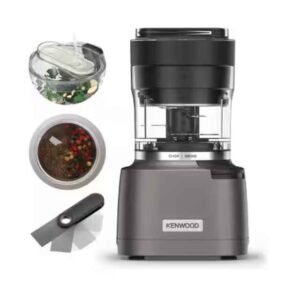
Kenwood 2in1 Chopper/Grinder CHP80.000SI
0 out of 5(0)- Two-speed settings with pulse control
- Separate bowls for chopping and grinding
- Quadblade stainless steel cutting system
- Dripper Pro lid for easy pouring
- Compact, stackable design Lightweight and dishwasher-safe parts
- Anti-slip feet and safety lock
- Includes a handy mini spatula
SKU: n/a
Showing the single result
Overview — Kenwood Choppers for Everyday Pakistani Kitchens
What a chopper is (and isn’t) vs blender/food processor
A Kenwood chopper is a compact, countertop helper built for fast, small-batch prep—think onions for salan, hari chutney, dry fruits for sheer khurma, or a quick salsa. It uses a motorized head and a small bowl with sharp blades to chop, mince, and mix ingredients in seconds. Because the bowl is smaller and the blade sits lower, you get uniform results without needing to stop and scrape too often. For busy homes and small kitchens in Pakistan, it saves time, cuts tears when dealing with onions, and reduces mess compared to knife prep.
It’s different from a blender or a full food processor. A Kenwood blender excels at liquids (smoothies, shakes, lassi) and vortex-based purees, while a food processor is a larger, multi-function machine with discs and bigger bowls for slicing, grating, and dough. A chopper stays in the middle: more control than a blender for dry or semi-dry ingredients, but far more compact and affordable than a processor. If you mainly need quick chopping for chutneys, herbs, nuts, aromatics, and small kabab binders, a Kenwood food chopper is the right fit.
Quick benefits
Speed and convenience top the list. With a mini bowl and a strong motor, a Kenwood chopper helps you finish repetitive prep—onions, tomatoes, green chilies, coriander—within minutes. Because the footprint is small, it’s easy to keep on the counter or tuck into a cabinet. Cleaning is straightforward: remove the blade with care, rinse the bowl and lid, and you’re done. For typical Pakistani recipes, short, controlled pulses give you the exact texture you want, whether coarse for salad and raita or finer for masala bases.
It’s also budget- and space-friendly. Rather than buying multiple attachments you may not use, you get a focused tool that nails daily prep. Families juggling power outages appreciate that a chopper works quickly, so you can process ingredients during short backup windows. If you need a broader tool later, you can always add a larger chopper or another model from the range. The end result is faster cooking with fewer tears, less mess, and more consistent texture across your go-to dishes.
Shop by Model & Capacity
Popular series & capacities
Kenwood choppers commonly appear in compact sizes designed for small to medium batches. You’ll see popular family names such as CH250, CH550, and CH580 when browsing. Mini bowls around 0.5 litre are ideal for single households or quick dips; slightly larger bowls suit 3–5 member families that prep onions, tomatoes, and herbs daily. If you’re preparing frequent chutneys, nut mixes, or sandwich spreads, a mini suits you; if you batch-prep for several meals at once, stepping up a size gives you more headroom to avoid overfilling.
Model naming is a helpful guide to “class,” not a guarantee of identical specs. Availability and exact capacities can vary with import batches. Treat each product tile as the source of truth for its bowl size, material, and included parts. If you’re unsure which bowl size matches your cooking routine—single vs family, daily chutney vs occasional prep—our team can help you choose based on what you cook most often.
Blade systems & power
Kenwood’s blade designs range from compact dual-blade setups to quad blade chopper configurations. Quad blades (often associated with the Kenwood chopper CH580 class) increase contact with ingredients, which helps with fibrous vegetables (carrots, cabbage), herbs, and nuts. Dual blades work well for basic onion-and-tomato duties and quick dips. If you often process tougher ingredients or want finer control over texture, quad blades are worth considering.
Power ratings vary by model, and you’ll see search phrases like kenwood mini chopper 500W and “300–500W” ranges. Higher wattage generally means better performance on hard ingredients and slightly faster processing, but technique matters: use short pulses, avoid overfilling, and check texture between bursts. For delicate herbs or breadcrumbs, brief bursts prevent over-processing; for nuts or meat, give the bowl a shake between pulses for even results. Always confirm the wattage and blade count on the individual product page to make the best match for your kitchen.
Attachments & extras
Some Kenwood choppers include useful add-ons such as a mayonnaise attachment (for controlled emulsions) or a whipping disc. Non-slip bases and safety interlocks are common quality-of-life features that keep the bowl stable and the motor from engaging unless properly locked. If you’re comparing multiple models, check which lid style, bowl material, and extras are included out of the box—these vary by SKU and batch.
Attachments can influence what you make. A mayonnaise tool assists with sauces like garlic mayo, while a whipping disc is handy for light batters or cream. If a particular attachment is essential to your recipes, look for it in the “What’s in the box” section on the product page. Unsure whether a specific model carries the Kenwood chopper mayonnaise attachment? Message us or call for guidance—we’ll help you match the model to your use case so you don’t pay for features you won’t use.
Tip: When you’re ready to explore, open the product tiles on this category to confirm bowl size, blade count, and included accessories. Models like the kenwood chopper CH250, CH550, and CH580 often cover most home needs—pick based on batch size and ingredients you prep most.
Kenwood Chopper Price in Pakistan
What affects the price
When you search for terms like kenwood chopper price in Pakistan or “kenwood ch580 price in pakistan,” you’ll notice ranges rather than a single fixed number. That’s normal. Prices shift with bowl size and build quality, motor wattage, and whether the unit carries a dual- or quad-blade system. Attachments also matter: models that include a mayonnaise tool or a whipping disc tend to sit higher than bare-bones variants. Finally, local factors—import batch, currency movements, and seasonal demand—push prices up or down.
Warranty status influences value too. Units advertised with original warranty in Pakistan typically cost more than grey/import-only stock, but they offer peace of mind if you need service. Packaging, included accessories, and even bowl material can vary slightly by batch. Because of these variables, treat a model’s product page as the source of truth for its current price, availability, and included parts.
How to check today’s price
Open any product tile on this category page to see live PKR pricing, stock status, and current promotions. We keep the listings updated so you can compare options quickly without guesswork. If you’re deciding between a couple of models (say, CH550 vs CH580), open both tabs and compare bowl capacity, blade configuration, and attachments side by side. For quick help, message us on the site or call 0339 2009000—our team at Emirates Electronics can confirm prices and suggest the right fit based on your recipes and batch sizes.
Still unsure whether you need a chopper or a different tool? For smoothie-heavy kitchens and liquid purees, a blender category might suit you better; for dry spices and harder ingredients, consider a grinder combo. You can also step up to a multi-function machine if you need slicing and grating. Explore these related categories for context: Blender & Grinder and Food Processors. Compare feature sets first, then return to the Kenwood chopper that matches your daily prep.
Budget vs performance picks
If you’re value-focused and mostly prep onions, tomatoes, herbs, and basic dips, a compact bowl with a simple dual-blade setup is typically enough. Look for straightforward controls and an easy-to-clean design; you’ll get the everyday speed-up without overpaying for extras. For smaller households (1–2 people) that prep frequently but in small amounts—raita, chutney, sandwich spreads—stick near the 0.5 litre mini class to avoid overfilling and to keep cleanup fast.
If you want more power and finer control (nuts, fibrous veg, tougher mixes, or small-batch mince), move up to a quad blade configuration. The extra blades increase contact with ingredients, helping produce even results with fewer pulses. If you regularly prep for 3–5 people, aim for a slightly larger bowl to reduce batch-splitting. Balance performance with what you’ll use weekly; there’s no need to pay for attachments you won’t touch.
Compare: CH250 vs CH550 vs CH580 (At-a-Glance)
Intended use & household size
CH250 (compact class): Designed for ultra-compact kitchens and single or duo households. Great for onion bases, herbs, chutney, and quick dips. It’s the “grab-and-go” option when speed and small-batch efficiency matter most.
CH550 (everyday class): A step up for families that cook daily. It’s the generalist—suitable for routine veg prep, nuts, and small portions of meat for kabab binders (with short pulses). If you frequently cook for 3–5 people, this class offers breathing room without going full food-processor.
CH580 (performance/quad-blade class): Aimed at tougher ingredients and finer textures. The quad-blade approach helps with fibrous veg and nuts, and gives you tighter texture control with fewer pulses. Think frequent chutneys, nut mixes, and consistent herb chopping for meal prep.
What to check on the product page
Because exact specs vary by batch, make these four checks before you decide: (1) Bowl capacity—match to household size and how often you batch-prep. (2) Wattage—higher wattage generally helps with harder ingredients; verify the rating on the product tile. (3) Blade configuration—dual vs quad blade affects speed and texture control. (4) Attachments—look for mention of a mayonnaise attachment or whipping tool if emulsions and light mixes matter to you.
Also confirm warranty language. If the product card states “original warranty,” keep your receipt for service claims. Check the “What’s in the box” section for any extras, and review care instructions (dishwasher-safe parts, if applicable, are model-dependent). If something is unclear, our support team can verify details so you know exactly what you’re getting.
Good / Better / Best picker
Good (CH250): Choose this if you live solo or as a couple, mostly prep aromatics and quick dips, and want the lowest footprint and price. It’s the practical starter for routine chopping without extra attachments.
Better (CH550): Pick this if you’re cooking daily for a small family and need a bit more room and power. It balances value with versatility and is forgiving when you occasionally overfill by a spoon or two.
Best (CH580): Opt for this when you want quad blade performance for nuts, fibrous veg, and tighter textures. If “even results in fewer pulses” sounds like you, and you don’t mind paying a little more for capability, this class is a confident choice.
Pro tip: If you realize you need slicing/grating or dough in addition to chopping, consider a food processor instead—and keep a chopper for quick weekday prep. For smoothies and spice grinding, check the blender & grinder category and pick a chopper only for what it does best.
Original Warranty & Authenticity (Pakistan)
How Kenwood warranty works locally
When a product page or box states original warranty in Pakistan, it generally means the unit was sourced through authorized channels and is eligible for local inspection/repair under the brand’s terms. Always treat the product tile and the warranty card inside the box as your source of truth. Keep your stamped invoice and packaging; service centers typically ask for the purchase date and model code. If the listing doesn’t explicitly mention warranty, assume it’s not covered and contact us to confirm before you buy.
Warranty duration, covered parts, and service-center locations can vary by batch and model. Read the leaflet in the box for the most current terms and follow the care instructions it specifies (duty cycle, cleaning method, safe loads). If you need help interpreting the card or locating a service point, call 0339 2009000—we’ll guide you on the exact steps and documents to carry.
Service & parts basics
Common consumables include replacement blades, bowls, lids, and seals. Availability varies by model and import cycle, so share your model code (e.g., CH250/CH550/CH580) when you reach out. For blade replacements, confirm the blade stack (dual vs quad) to avoid mismatches. Bring or photograph the old blade/bowl when visiting a service desk—tiny differences in stems and couplers matter.
Electrical safety helps you stay within warranty. Pakistan’s mains are typically 220–240V; use a reliable socket, avoid daisy-chained extensions, and consider a surge protector if you run the chopper alongside heavy appliances or on generator/UPS. Damage from misuse, liquid ingress into the motor, or operation outside the manual’s limits is usually excluded—check your leaflet for specifics.
Store support
You can always reach Emirates Electronics at 0339 2009000 or visit us at Office No 206, 2nd Floor, Seema Electronics Centre, Abdullah Haroon Road, Saddar, Karachi. We’ll help you confirm whether a particular SKU carries original warranty, guide you on parts requests, and clarify any listing details. For exchanges/returns, please follow the policy shown on the product page or invoice (policies can differ by product and condition).
Choosing the Right Kenwood Chopper
Capacity & batch size
Start with your household size and prep style. For 1–2 people, a 0.5-litre mini is perfect for daily onion-tomato bases, raita, and green chutney. If you routinely cook for 3–5, step up a bowl class to cut repeat batches and reduce overfilling. For Ramadan meal prep or weekly batching (salsa, herb mixes, sandwich spreads), a slightly larger bowl keeps textures consistent and reduces mess from spillage.
If most of your work is liquid-heavy (soups, baby food, smoothies), consider whether a chopper is the right primary tool. A hand blender can be better for hot pots and purees; see Hand Blenders for immersion options that blend directly in your saucepan without transfers. Use a chopper alongside it for quick dry or semi-dry tasks (nuts, onions, herbs) where precise chopping beats pureeing.
Power & blade configuration
Match blade design to ingredients. Dual blades are efficient for daily onion, tomato, and chili prep. A quad blade stack engages more of the bowl volume and helps with fibrous veg (cabbage, carrots), nuts, and uniform herb chopping. If you plan to process small portions of meat for kabab binders, stick to short pulses, clear the sides between bursts, and avoid overpacking—this keeps texture consistent and protects the motor.
Higher wattage aids tough jobs, but technique matters more than the number on paper. Keep loads moderate, pulse in 1–2 second bursts, and check texture often. If your model’s leaflet specifies a duty cycle (e.g., work/rest intervals), respect it to prolong motor life.
Kitchen realities in Pakistan
Counter space, water, and power stability all shape the best choice. A compact unit stores easily and cleans fast under low water pressure. During load-shedding, quick pulse cycles help you finish prep on limited backup power. Avoid operating the chopper on unstable voltage; if lights dim, pause and let power stabilize. After long runs or heavier loads, let the motor cool before the next batch.
For longevity, wipe the motor base after each session, keep the cord away from hot cooktops, and store blades in a sheath or original box to prevent accidental cuts and dulling. If your kitchen is humid, air-dry the bowl and lid fully before reassembly to protect seals.
Care, Safety & Troubleshooting
Daily care routine
Before use, seat the bowl on the base, load ingredients below the max line, and lock the lid until it clicks (most models won’t run unless interlocked). Use brief pulses for control; shake the bowl gently between bursts to redistribute ingredients. After use, unplug, lift the blade out carefully, and rinse the bowl/lid immediately so residues don’t dry. Never immerse the motor unit—wipe it with a slightly damp cloth and dry.
Knife-level sharpness demands caution. Always handle the blade by the central hub, not the edges, and store it safely. Keep the chopper out of children’s reach and avoid processing very hard items (ice blocks, bones, rock-hard frozen food) unless your model’s leaflet explicitly allows it.
Cleaning & odour control
For everyday cleanup, warm soapy water is enough. If onion/garlic odour lingers, rinse with a quick solution of water + a few drops of lemon juice or a teaspoon of white vinegar; let sit for a minute, then rinse again. For oily residues (nuts, chutneys), a small drop of dish soap and a soft sponge do the job—avoid abrasive scouring that can haze the bowl.
Dishwasher guidance is model-specific. Some bowls/lids may be top-rack safe, while others are hand-wash only. Consult your product page or leaflet to be sure. To prevent cross-flavour transfer, dedicate separate prep sessions for sweet vs savoury (or rinse between), and dry parts fully to protect seals.
Replacement blades & bowls
If your blade dulls or the bowl cracks, replacements are often available for popular model families. To request parts, share: (1) model code (e.g., CH580), (2) a clear photo of the part, and (3) your purchase date. Stock can vary by batch, so we’ll check current availability and lead time. Using the correct OEM part preserves fit and safety; avoid “almost fits” alternatives that stress the coupler or lid.
Troubleshooting quick list
Won’t start: Check that the bowl is seated and the lid interlock is engaged; test a different socket; ensure the load isn’t jammed against the blade.
Uneven chopping: Reduce fill level, use shorter pulses, and scrape/shake between bursts; verify blade sharpness.
Leaking/splatter: Stay under the max line; avoid very thin liquids; inspect lid seal for wear or misplacement.
Burning smell/warm motor: Stop immediately, empty part of the load, and let the unit cool. Use duty-cycle rests for dense jobs.
Excess vibration: Pre-cut oversized chunks, remove hard pits/stems, and ensure the work surface is flat and dry.
If an issue persists, stop using the unit and call 0339 2009000. We’ll help you identify whether it’s a simple usage fix or a case for service.
Use Ideas (Local Recipes)
Everyday ideas
For daily meals, use the chopper to build flavour quickly. Pulse onions for your salan base until just coarse, then add tomatoes and green chilies for a quick masala mix. For raita, combine cucumber, mint, and yogurt the smart way: chop solids first, then fold into yogurt by hand to keep the texture light. Hari chutney takes under a minute—coriander, mint, green chili, lemon, and a pinch of salt—pulse in short bursts to avoid bitterness.
If you lean sweet, a handful of roasted nuts becomes dessert toppers in seconds. Dry fruits for sheer khurma or kheer should be pulsed gently to avoid a powdery texture. For sandwich spreads, blend boiled eggs, mayo, and a touch of mustard using very short pulses; scrape the sides between bursts so the mix stays creamy instead of pasty.
Quick protein prep
Small-batch kabab mix is where control matters. Add roughly cut meat with onion, green chili, coriander, and spices; pulse briefly, check texture, and stop when the mixture binds but still has bite. Over-processing turns the mix gummy, so keep batches small and rest the motor between rounds if you’re cooking for a crowd.
For chicken fillings (samosa, sandwiches), pre-cook and cool the meat, then pulse with seasonings. If moisture builds up, add breadcrumbs or squeeze excess liquid from onions before chopping. Always clear bones and cartilage; choppers aren’t designed for hard fragments.
Entertaining
Build a dip trio in minutes: mint chutney, roasted pepper salsa, and garlic mayo (if your model includes the mayonnaise attachment). Chop nuts for topping haleem or pulao, or prep a crunchy salad base by pulsing cucumbers, tomatoes, and onions separately so each ingredient keeps its texture. For games night, make quick salsa and hummus—pulse chickpeas separately before adding tahini and lemon by hand for a smoother finish.
When prepping in advance, portion sauces into small airtight containers and refrigerate. Label with the date and use within a couple of days for best flavour. For Ramadan, batch chutneys and nut mixes over the weekend and keep portions ready to go—your iftar spreads will come together fast with minimal last-minute effort.
FAQs
What is the best Kenwood chopper in Pakistan?
“Best” depends on what you chop most. For 1–2 people and basic aromatics, a compact class like CH250 makes sense. For families that cook daily, CH550 balances bowl size and versatility. If you want finer textures with fewer pulses, consider the performance class associated with quad blades, such as CH580.
Match your pick to your kitchen reality—batch size, ingredients, and storage space. If you often chop fibrous veg and nuts, a quad-blade model is a smart upgrade. If you mostly prep onions, herbs, and dips, a dual-blade mini keeps cost and cleanup low.
Kenwood chopper price in Pakistan / CH580 price in Pakistan?
Prices vary with bowl size, wattage, blade configuration, attachments, and warranty status. Import batches and currency shifts also influence the final ticket.
To see today’s PKR price, open the product tile of the model you’re considering (for example, CH550 or CH580). The listing shows current price, availability, and any promotions.
CH580 vs CH550 vs CH250 — which one should I pick?
Think in tiers: CH250 = compact basics; CH550 = everyday family use; CH580 = quad-blade performance for tougher ingredients and finer textures.
Before deciding, check capacity, wattage, blade type, and attachments on the product page. Choose based on household size and the ingredients you process most.
What do “kenwood mini chopper 500W”, “quad blade”, and “0.5 litre” really mean?
“500W” indicates motor power; higher wattage helps with dense loads but technique still matters. “Quad blade” means a four-knife stack that contacts more of the bowl for even chopping.
“0.5 litre” refers to bowl capacity—ideal for dips, chutney, and small onion batches. It keeps portions tight and cleanup fast for solo and duo households.
Does my chopper include a mayonnaise attachment?
It’s model-dependent. Some SKUs include a mayo tool or whipping disc, while others focus on the core blade only. Always check “What’s in the box” on the product page.
If emulsions are important to you (garlic mayo, aioli), shortlist models that mention the attachment explicitly or contact support to confirm before purchase.
Can I get Kenwood chopper blades replacement and other parts in Pakistan?
Yes—common parts like blades, bowls, lids, and seals are often available for popular series. Share your model code (e.g., CH580) and a photo of the part so we can match it correctly.
Stock can vary by batch, so we’ll check availability and lead time. Using OEM parts protects fit and safety compared with “almost fits” generics.
Is a Kenwood chopper good for meat and vegetables?
Yes, in small batches with short pulses. For meat, remove bones and connective tissue, and stop as soon as the mix binds. For vegetables, pre-cut larger pieces and avoid overfilling for even results.
For ultra-smooth purees or hot soups, a hand blender or full blender is a better tool; use the chopper where precise chopping is the goal.
How do I verify original warranty in Pakistan?
Look for “original warranty” on the listing and check the physical warranty card inside the box. Keep your stamped invoice; service centers usually request it.
If the listing is unclear, ask our team to confirm the SKU’s warranty status before buying. Policies can vary by model and batch.