
Kenwood Hand Mixer
Showing the single result
Showing the single result
Kenwood Hand Mixer in Pakistan
Looking for a reliable Kenwood hand mixer for everyday mixing and baking in Pakistan? This category page gathers our in-stock options and explains, in plain language, how to pick the right model for cake batters, whipped cream, cookies, and quick home recipes. Because prices and availability change with imports and the dollar rate, we don’t lock specs or rates here—check each product card for live details and offers. If you want help, call Emirates Electronics at 0339 2009000 or visit our Saddar Karachi office (Office No 206, 2nd Floor, Seema Electronics Centre, Abdullah Haroon Road) for in-store guidance.
Why Choose a Kenwood Hand Mixer?
Built for everyday Pakistani kitchens
Kenwood’s electric hand mixers are compact and powerful enough for daily tasks in Pakistani homes—think beating eggs for omelettes, whipping cream for desserts, mixing cake batters for birthdays, and preparing pakora batter when guests arrive. Compared to mixing by hand, you’ll get consistent texture and faster results, which matters when you’re juggling gas timings or load-shedding. For bakers, a hand mixer is the quickest way to reach soft peaks or a smooth batter without moving to a large countertop machine.
For heavy doughs (roti, pizza, or naan), a hand mixer is not the ideal tool—use a stand mixer or food processor. But for light to medium mixing—cakes, cupcakes, brownies, frostings, and meringue—a Kenwood hand mixer hits the sweet spot of portability and performance.
What you get in the box
Most Kenwood hand mixers include two stainless-steel beaters for everyday mixing, and many add dough hooks for light kneading. Some variants include a balloon whisk attachment for whipping egg whites and cream faster. A few models come with a rotating bowl (see “With Bowl vs. Without Bowl” below). What’s inside the box can vary by model and batch—always confirm the attachment list on the product card before ordering. If you’re unsure, message us or call and we’ll verify the exact inclusions for you.
Shop by Type
With Bowl vs. Without Bowl
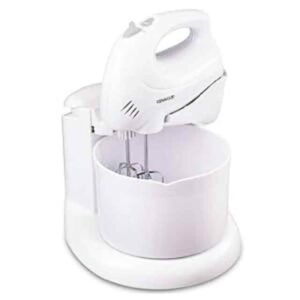
With Bowl: Great if you bake often and want hands-free mixing for longer batters or frosting. The motor unit locks onto a stand and drives a rotating bowl, so you can add ingredients gradually without holding the mixer. This setup saves wrist effort and keeps mixtures consistent across batches—useful for home bakers selling cupcakes or cakes in Karachi or Lahore.
Without Bowl: Best if you need a compact, grab-and-go tool for occasional baking. A standard hand mixer without a bowl stores easily in a drawer, cleans quickly, and costs less. It’s perfect for whipping cream for kheer toppings, mixing sponge cake batter, or preparing quick desserts during Eid and family gatherings.
250–300W: Which wattage is right for you?
250W mixers are designed for lighter tasks—whipping cream, eggs, thin batters, and everyday mixing. They’re quiet, efficient, and friendly for smaller batches. If your main focus is whipped cream, sponge cakes, and frostings, 250W is usually enough.
300W mixers give you extra push for thicker brownie batter, cookie doughs, and denser mixes. While hand mixers (even 300W) aren’t meant for heavy bread dough, the extra torque helps when you occasionally make thicker batters or stiffer frosting. If you bake weekly or prepare larger family batches (for example, two 9-inch cakes), 300W is the safer bet.
Speeds & controls
Speed steps control how gently or aggressively the beaters turn. More steps (e.g., 7-speed) give finer control at the low end for folding flour or starting dense mixes without splatter, and at the high end for faster whip times. A Turbo or “burst” button momentarily boosts power—handy to finish off peaks or clear a pocket of dry ingredients in batter. If you’re new to hand mixers, start at low speed for 10–20 seconds to prevent flour clouds, then step up gradually.
Pro tip for smooth cakes: alternate the dry ingredients and liquids while mixing at low speed; switch to medium for 20–30 seconds to unify, then stop and scrape the bowl with a spatula to avoid overmixing. That’s how you get tender crumbs without tunnels.
When a different tool is better
If you often blend smoothies or milkshakes, explore Kenwood Blender options for jug capacity and ice-crushing performance. And if you frequently puree soups, sauces, or baby food right in the pot, a hand blender is more convenient than a hand mixer. These categories help you match the right tool to the job.
Note: Exact wattage, speed steps, and attachments differ by model. Always refer to each product page for the current spec and warranty details shown there.
Key Features Explained
Attachments & what each one does
Beaters (pair): Your daily drivers. Use them for cake and cupcake batters, whipping cream for desserts, creaming butter and sugar, and mixing frostings. Start slow for 10–20 seconds to prevent splashes, then step up gradually. Beaters give you the most even texture for sponges and chiffon-style mixes that need air without overworking the flour.
Dough hooks (pair): Designed for light doughs and thicker batters—think cookies, soft doughnuts, and occasional pizza dough in small batches. They’re not a replacement for a stand mixer or food processor when you’re working tough roti or bread dough. If your mix starts to climb the hooks or the motor strains, stop, rest the unit, and reduce the batch size.
Whisk (single balloon, on some models): Great for speed-whipping egg whites or cream to soft/firm peaks. The open design moves more air through the mixture so you reach volume faster—useful when making meringue toppings or a quick chocolate mousse. If your model doesn’t include a whisk, the standard beaters can still whip effectively with a minute or two of extra time.
Rotating bowl/stand (on “with bowl” variants): The stand holds the mixer and drives a turntable so the bowl rotates while mixing. This setup lets you add ingredients gradually and keeps mixing uniform across batches. It’s a comfort upgrade if you bake frequently or sell home-baked goods; otherwise, a simple handheld model saves space and cost.
Note: Exact attachments vary by model and stock batch. Always confirm what’s included on the product page before ordering. If you need help verifying, call 0339 2009000 and we’ll check the current box contents for you.
Comfort & build
Grip and balance: A comfortable handle with a clear trigger or slider for speeds matters more than you think. Good balance reduces wrist fatigue during 4–6 minute mixing runs for buttercream or dense batters. If you have smaller hands or arthritis, a lighter unit without a stand may be easier to control.
Speed control & eject: Look for a responsive speed dial/slider with clear detents so you can step up without sudden jumps. A dedicated eject button saves time and keeps fingers away from messy attachments. A Turbo (burst) button is handy for the last 10–15 seconds when finishing peaks or clearing a pocket of flour, but use it in short pulses to avoid splatter.
Materials & finish: Stainless-steel attachments are durable and easier to clean than plastic. The mixer body is typically a rigid plastic that wipes clean; vents on the sides and back let heat escape. Keep these vents clear of flour and icing sugar so the motor stays cool. If you notice warmth at the vents during thicker mixes, pause for a brief rest—this is normal under load.
Noise & cord management: Hand mixers make a gentle hum at low speeds and a sharper tone at high speeds. If you bake late at night, start on low and move up once ingredients are fully wet to keep noise (and mess) down. When storing, coil the cord loosely (don’t wrap tightly around the body) to reduce stress on the plug end.
Care & maintenance
Cleaning: Unplug first. Eject attachments and wash them in warm soapy water; unless the product page states they’re dishwasher-safe, hand-washing is the safest choice. Wipe the motor body with a slightly damp cloth and dry immediately. Never immerse the motor unit in water, and avoid getting water into the vents or speed dial.
Mixing technique: For smooth batters, move the beaters in a slow figure-eight around the bowl, occasionally stopping to scrape down with a spatula. If a mixture thickens unexpectedly (e.g., cocoa plus butter can clump), step down a speed or add a spoon of liquid to help the beaters travel. Overbeating traps too much air and can dry out cakes—once the flour disappears and the batter looks uniform, stop.
Motor protection: Pakistan’s voltage fluctuations can stress small appliances. Use a quality surge protector or UPS where possible. Don’t run at top speed for extended periods on very dense mixes—alternate 45–60 second runs with brief rests so the motor cools. If you smell overheating or see smoke, stop immediately and let it cool fully before rechecking your recipe consistency.
Storage & longevity: Dry attachments completely before storing. Keep the mixer in a cabinet to avoid kitchen grease buildup on vents. If the eject button feels sticky over time, wipe gently around the button with a dry cotton swab. Proper care extends the life of the motor and keeps speeds consistent for years.
Buying Guide for Pakistan
Warranty & what it usually covers
Coverage varies by model and batch. Some Kenwood hand mixers arrive with a brand-backed warranty; others may carry store-supported assistance depending on the import channel and current stock. Because these details can change, we display the exact warranty terms on each product page. Please check the specific product card before you order, or call us for the latest status.
What’s commonly covered: Manufacturing defects that appear during normal household use within the stated period (as noted on the product page). What’s generally not covered: damage from misuse (e.g., immersing the motor body in water), impact damage, unauthorized repairs, or electrical issues caused by unstable power or surges.
How to claim: Keep your purchase invoice and original box/accessories safe. If you notice a functional issue, contact Emirates Electronics at 0339 2009000 with your order details. We’ll guide you on the appropriate next step, which may involve basic troubleshooting, submitting the unit for inspection, or connecting you to an authorized service channel as applicable to that specific model’s warranty.
On delivery day: Inspect the package and verify that attachments listed on the product page are present (beaters, dough hooks, whisk if applicable, manuals). Report any missing items or transit concerns promptly so we can assist. For long-term protection in areas with frequent voltage spikes, consider using a surge protector from day one—this helps prevent avoidable electrical damage that warranties typically don’t cover.
Tip for peace of mind: Take a quick photo of your invoice and store it in your phone’s gallery. If you ever need warranty assistance, having the proof of purchase ready speeds up the process.
Price factors in Pakistan
Imports & dollar rate: The Kenwood hand mixer price in Pakistan moves with import costs and the USD–PKR exchange rate, so prices can vary even within the same month. To avoid confusion, always rely on the live price shown on the individual product page at the time you order. If you’re comparing across models, take a screenshot of each price so you can revisit the difference later.
Attachments & build: Models that include dough hooks, a whisk, or come with a rotating bowl usually cost more than “beaters-only” units. Stainless-steel attachments also add to price but pay off in durability and easier cleaning. If you’re a casual baker, a simple beaters-only set can be the best value; for regular cake and cookie batches, hooks and a whisk save time and improve results.
Wattage & speed steps: A 300W model and/or 7-speed control usually sits higher than a 250W/5-speed alternative. That said, wattage alone isn’t the whole story. If your recipes are mostly whipped cream, sponge cake, and frostings, 250W can be sufficient; you’ll really feel the 300W advantage on thicker batters and larger family batches.
Season & promotions: Kitchen appliances often see limited-time deals around Eid, wedding season, and year-end sales. Because discounts can be time-bound and stock-dependent, add items to your cart and check out promptly if you see a good offer. If a promotion ends, call us and we’ll confirm current availability and any store-level bundle we can offer that day.
Total cost of ownership: Consider a surge protector to guard against voltage spikes—cheap insurance for small motors. Also factor replacement attachments if you bake frequently; stainless beaters and hooks last longer and maintain performance with less bending over time.
Delivery & payment options
Nationwide delivery: We aim to ship across Pakistan with delivery times that vary by city and courier load. Your exact options show during checkout along with any shipping charges. If you’re in Karachi and prefer to visit, you can reach us at 0339 2009000 or stop by our Saddar office (Office No 206, 2nd Floor, Seema Electronics Centre, Abdullah Haroon Road) for in-person help and pickup coordination.
Payment methods: Where available, we support multiple payment modes; the final list appears during checkout and may vary by order value or destination. If you need a specific payment workflow (e.g., business invoice, bank transfer confirmation), call us before you place the order and we’ll guide you to the smoothest option for your case.
Order checks & support: Once your package arrives, verify the mixer body and all listed attachments immediately. If anything seems off, contact us the same day with your order number and unboxing photos so we can resolve it quickly.
Compare Your Options
Without Bowl
Typically 250–300W with 5–7 speeds, the “without bowl” option suits whipped cream, sponge cakes, frostings, and small cookie batches. It’s the most compact format—easy to store and clean—so it’s ideal for quick jobs and small kitchens. It’s usually the most affordable route and a perfect entry point for new bakers.
With Bowl
Often around 300W with 5–7 speeds and a Turbo function, the “with bowl” setup is designed for frequent baking and longer mixes. It requires counter space, but it’s comfortable for hands-free mixing and consistent results across batches. Costs are higher due to the stand and bowl, but if you bake weekly, the comfort and consistency pay off quickly.
Accessories-Focused
In the 250–300W, 5–7 speed range, an accessories-rich option covers all-round home baking—from creams and meringue to light doughs. You’ll store a bit more hardware than a beaters-only set, but the versatility saves future upgrade costs. If you bake often, it’s the most flexible path.
Selection checklist: 1) Recipes: cream and sponge → 250W; cookies and denser mixes → consider 300W. 2) Batch size: frequent, larger batches → a stand with rotating bowl. 3) Attachments: pay for what you’ll use—hooks and whisk help if you bake regularly. 4) For heavy doughs and bigger prep, consider a Kenwood Food Factory. 5) From mixing to baking, explore Kenwood Oven Toaster models that fit your kitchen space and cake tin sizes.
FAQs
Can a hand mixer knead roti or pizza dough
A hand mixer can handle light doughs in small batches with dough hooks, but continuous kneading of tough roti or pizza dough will strain the motor. For frequent heavy dough work, use a stand mixer or a food processor designed for dough. If you only do an occasional soft pizza dough, keep the batch small and let the motor rest between bursts.
For daily chapati dough, we don’t recommend a hand mixer. Consider purpose-built solutions that handle the load comfortably and protect your investment in the long run.
What’s the difference between 5 and 7 speeds
Both can get the job done, but 7 speeds offer finer control at the low end to start dense batters without splatter and at the high end to hit peaks faster. If you bake regularly and switch between fluffy sponges and thicker mixes, those extra steps make mixing easier and cleaner.
If you bake occasionally and mostly do whipped cream or simple batters, a 5-speed model is typically sufficient, especially at 300W where torque compensates for fewer steps.
Is a hand mixer the same as a hand beater machine
Yes, in everyday Pakistani usage the terms “hand mixer,” “electric hand mixer,” and “hand beater machine” all refer to the same appliance. Differences are usually in wattage, speed steps, and which attachments come in the box.
When you compare models, check for the attachments you actually need—beaters are standard, hooks help with thicker batters, and a whisk attachment speeds up egg whites and cream.
Which is better for cake and baking at home: 250W or 300W
Both can bake great cakes. If you mostly make sponge cakes, whipped creams, and frostings, 250W is usually enough and keeps costs down. If you plan brownies, cookies, and larger family cakes, 300W gives welcome headroom and keeps mixing times short.
Remember that technique matters: start slow, scrape down, and stop when the flour disappears to avoid overmixing—this has more impact on texture than wattage alone.
Do I need a 7-speed Kenwood hand mixer
It depends on your recipes. Seven speeds are helpful when shifting between gentle folding and fast whipping without splatter. If you often whip egg whites or make buttercream, the extra steps feel smoother.
For simpler jobs, a 5-speed model will work fine. Prioritize overall build, comfort, and attachments over chasing the highest number of speeds.
How can I make sure I’m buying an original Kenwood hand mixer in Pakistan
Buy from reputable sellers, keep your invoice, and verify what’s written on the individual product page—especially the warranty line and included attachments. If anything is unclear, call us and we’ll confirm current batch details before you place the order.
Original units have consistent fit and finish, clear labels, and well-formed stainless attachments. If packaging or printing looks off, ask for clarification before unboxing.
What’s the best way to get a good price online
Because the Kenwood hand mixer price in Pakistan fluctuates with imports and exchange rates, rely on the live price on the product page. Add your preferred model to the cart and watch for seasonal sales around Eid, wedding season, and year-end. If a deal ends, call us to check current offers or bundle options.
To avoid missing out, compare like-for-like: wattage, speed steps, and attachments. A slightly higher price with hooks and a whisk can be better value than a bare-bones unit if you bake regularly.
Can I use the hand mixer as a whisk
Yes. Standard beaters whip cream and egg whites effectively, though a balloon whisk attachment (if included) reaches peaks faster because it moves more air. Start on low to avoid splatter, then step up as the mixture thickens.
If your model doesn’t include a whisk, you can still whip successfully with beaters by extending the mixing time a little.