
Panasonic Microwave Oven
Showing the single result
-
Kitchen Appliances, Microwave Oven, Panasonic Microwave Oven
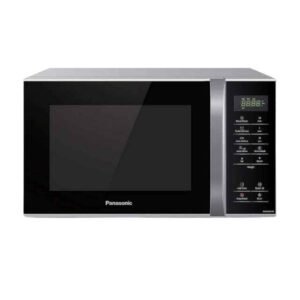
Panasonic Microwave Oven NN-ST34
0 out of 5(0)- Type: Solo Microwave Oven
- Oven Capacity: 25 L
- Cooking Power: 800 W
- Turntable Diameter: 288 mm
- Color: Black & Silver
- Display Panel: 4 digit LCD
- Door Front: Black & Silver
- Door Window: Black masking
- Door Release: Handle
- Oven Interior: Acrylic Grey
- Auto Cook/Reheat: Yes
- Quick Minute: Yes
- Cavity Dimensions (W x D x H): 315 x 349 x 227 mm
- Unit Dimensions (W x D x H): 485 x 400 x 287 mm
- Net Weight: 12.7 kg
SKU: n/a
Showing the single result
Shop Panasonic Microwave Ovens in Pakistan
Why Panasonic?
Panasonic microwave ovens are trusted worldwide for consistent heating, durable build quality, and practical features that suit everyday Pakistani kitchens. Whether you’re softening rotis, reheating daal and rice, or quickly defrosting chicken and qeema, Panasonic’s even heat distribution helps you get reliable results without cold spots. With models ranging from compact solo units to advanced convection systems for baking and roasting, the lineup covers student hostels, small apartments, and large family homes alike.
Another standout is Panasonic’s inverter technology available in select models. Instead of switching the magnetron on and off at full power, inverter control delivers a steady stream of energy. In everyday use, that means gentler defrosts (less “half-cooked edges, frozen center”), more predictable reheats, and improved texture for foods like kebabs, pasta, and leftovers. It also reduces unnecessary energy spikes—useful in areas prone to voltage fluctuation.
Who This Collection Is For
Busy families who want quick, even reheating without hovering over the stove will love how Panasonic keeps food moist while saving time on school mornings and late dinners. Students and singles living in hostels or studios can choose compact capacities that fit tight counters and offer easy menus for instant noodles, popcorn, and quick snacks. Home bakers and food enthusiasts who crave versatility can opt for Panasonic convection models to bake cupcakes, pizzas, brownies, and roast veggies or chicken—without investing in a full-sized oven.
Panasonic’s range also helps small cafés, bakeries, and office pantries with fast, repeatable results in high-traffic settings. If you’re upgrading from an older unit, you’ll notice shorter warm-up times and more even results, especially on 900–1000 watt models. Prefer to browse across multiple brands too? Explore our broader selection here: Microwave Ovens.
Choose the Right Type
Panasonic Solo Microwave Oven
Solo microwaves are the simplest, most budget-friendly choice for everyday reheating and defrosting. If your routine is warming tea, reheating one-plate meals, softening rotis, melting butter or chocolate, and defrosting meat, a Panasonic solo microwave nails the essentials without extra complexity. For smaller households or hostel rooms, capacities in the 20–23 litre range feel just right and keep the footprint minimal.
What solo models don’t do is browning or baking. If you need golden-cheese toasties, grilled sandwiches, or broiled kebabs, consider stepping up to a grill model. For cakes, pizza, or cookies, you’ll want a convection option. But if your priority is clean, consistent reheats with straightforward controls, a Panasonic solo microwave oven is the smart, economical pick.
Panasonic Grill Microwave Oven
Grill models add a heating element that browns and crisps the top surface of food—great for open-faced sandwiches, shami kebabs, tikka-style finishes, and reheating leftovers that need a little texture. Compared to solo microwaves, Panasonic grill ovens help you avoid soggy results when you want a crunchy top or classic “toasted” bite. Many units include grill racks and presets to simplify the process.
If your kitchen routine often includes quick snacks, cheesy bakes, or simple kebabs, a grill microwave balances convenience with that appetizing finish. However, remember that while grill models add browning, true baking (like sponge cakes or cookies with an even rise) is best handled by a convection microwave oven.
Panasonic Convection Microwave Oven
Convection microwaves combine standard microwave heating with a fan and heating element that circulates hot air—enabling baking and roasting. For Pakistan’s love of home baking, a Panasonic convection microwave oven opens the door to cupcakes, brownies, pizza, naan chips, and roasted chicken without the footprint of a full oven. It’s a strong choice for families who want one appliance that can reheat, brown, and bake.
When comparing options, consider your typical tray size and headroom for rise. A 27–32 litre Panasonic convection unit often hits the sweet spot for families who bake on weekends and entertain guests. Many models offer multi-stage cooking (e.g., defrost → cook → grill) and sensor menus to reduce guesswork—handy when you’re multitasking during busy evenings or Ramzan preparations.
Panasonic Inverter Microwave Oven
Inverter-equipped Panasonic models change the game for defrosting, reheating delicate items, and cooking more evenly. Instead of blasting at full power and then pausing, inverter microwaves deliver steady power that protects texture—think juicy chicken breast, flaky fish, and moist reheated biryani. You also spend less time opening the door to stir, which helps preserve heat and shorten total cook time.
In many Pakistani homes with voltage fluctuation, inverter control reduces harsh power surges on food. It’s not a replacement for a stabilizer where one is needed, but it can make everyday reheats and defrosts more predictable. If you frequently prepare baby food, melt chocolate, or reheat baked goods where texture matters, look for a Panasonic inverter microwave oven in the 900–1000 watt range for a practical balance of speed and control.
As you browse this category, you’ll see options across Panasonic microwave 23 liter and Panasonic microwave 32 liter classes, with choices in solo, grill, and convection. If you’re comparing features like Panasonic microwave oven for baking, Panasonic inverter microwave oven, or seeking a Panasonic microwave oven 1000 watt model, the filters and product cards will help you quickly narrow down to the best fit for your kitchen and budget in Pakistan.
Size, Power & Fit Guide
Capacity Bands: 20–23L, 27–32L, >32L
Capacity determines how much you can cook or reheat at once and how comfortably your dishes fit. For most Pakistani households, think in terms of your largest everyday crockery and the meals you prepare most often. A 20–23 litre Panasonic microwave suits hostel rooms, studio apartments, and couples who reheat one-plate meals, soften rotis, or defrost half a kilo of meat. The turntable typically handles a standard 10–10.5 inch dinner plate, but taller dishes may brush the ceiling—so check your tallest bowls.
If you regularly heat family portions, marinated chicken, or bake small batches, a 27–32 litre range is a sweet spot. This size gives more headroom for rising cupcakes and a wider turntable (often accommodating a 11–12 inch plate or a low baking tray). Families in Karachi, Lahore, and Islamabad who host guests on weekends often prefer this bracket for its flexibility—large enough for sharing plates, compact enough for average counter depths.
For bigger households, batch cooking, or frequent baking/roasting, >32 litre models offer generous space for full platters and higher-volume prep (eid gatherings, daawats, or weekly meal prep). These units tend to be deeper and taller, so plan the countertop footprint and the door swing in galley-style kitchens. If you intend to place the microwave above a front-loading washing machine or next to a refrigerator, confirm door clearance and airflow (see placement notes below).
Wattage Basics: 800W, 900–1000W, >1000W
Wattage influences speed and, to an extent, evenness. Around 800W is adequate for solo tasks like reheating a plate of rice and curry or making oatmeal. At 900–1000W you’ll feel the pace: faster warmups and better results on denser foods (biryani, baked pasta, mixed platters) with fewer hot-and-cold patches—especially if you choose a Panasonic inverter model that smooths power delivery.
Beyond 1000W, you get rapid heating that’s great for busy kitchens, cafés, or shared office pantries. However, higher wattage can magnify overcooking if you don’t adjust time and power levels. In Pakistan’s voltage-fluctuation context, wattage isn’t the same as electricity waste—smart use of power levels, shorter cycles, and inverter control can actually help keep overall energy use sensible by avoiding re-runs and long pauses.
Placement & Ventilation
Microwaves need breathing room. Leave open space behind and on the sides so heat can dissipate—especially for convection and grill models that run fans and elements. Avoid wedging the unit into a closed cabinet unless the manufacturer explicitly supports built-in ventilation standards. Keep at least a few centimetres between the back vents and the wall, and don’t cover the top with boxes or jars; trapped heat shortens component life.
In compact Karachi or Lahore kitchens, try a waist-height counter rather than eye-level shelves; lifting heavy glass dishes out of an overhead microwave can be risky. Keep the unit away from stove flames and steam to protect electronics. For hostel rooms or shop counters, ensure the surface is stable and level; a vibrating turntable often means the unit isn’t sitting flat. Finally, consider proximity to a dedicated socket to avoid long, overloaded extension cords.
Quick size picks (Pakistan use-cases):
• 20–23L (Solo/Grill): reheats, tea, rotis, defrost for 1–2 people.
• 27–32L (Grill/Convection): family portions, weekend baking, pizza & brownies.
• >32L (Convection): big trays, batch cooking, frequent roasting or entertaining.
Prices & What Affects Them in Pakistan
Feature Drivers
When shoppers search for a Panasonic microwave oven price in Pakistan, differences usually trace back to features. Inverter-equipped models command a premium for their steady power control, which helps with delicate reheats and consistent defrosts. Grill models cost more than solo because of the heating element and accessories that deliver browning and texture. Convection options add a fan and heating system for baking/roasting—and therefore sit higher on the price ladder.
Beyond the headline features, look for sensor menus that auto-adjust power and timing for common foods, child locks for family kitchens, easy-clean interiors, and multi-stage programs (defrost → cook → grill). Each of these conveniences can nudge the price upward, but they also reduce user error and help you get reliable results on busy evenings.
Capacity & Wattage Impact on Price
Larger capacities and higher wattages typically cost more, both for the bigger cavity and the stronger components needed to heat it efficiently. A Panasonic microwave 23 liter price range generally sits below a Panasonic microwave 32 liter price range of similar feature sets. If your main goal is everyday reheating and you rarely host, a compact solo could be the most cost-effective. If you bake, roast, or cook for a family, a mid-to-large convection unit can pay back in convenience by replacing multiple appliances.
For value hunters comparing across brands, it can help to review alternatives alongside Panasonic. If you’re balancing budget with features, you can also browse LG microwave ovens to see how capacities and feature mixes differ and where Panasonic’s inverter or convection models match your cooking needs.
Seasonal Factors, Availability & Where You Shop
Local timing affects deals. Ramzan demand (iftar prep, sehri reheats) and summer loadshedding can increase interest in microwaves, occasionally tightening supply on popular capacities. City-to-city availability may vary; customers searching for a Panasonic microwave oven Karachi or Panasonic microwave oven Lahore will often see overlapping models but different inventory levels. Online promotions versus in-store bundle offers can also diverge, so compare before you decide—especially if you want a bundle with a grill rack set or baking accessories.
If you prefer browsing categories and shortlisting models at home, try our curated collections—then call for live guidance. For baking-heavy households, you may also compare with countertop ovens for bigger trays: see Oven Toasters. For healthier snacks without deep-frying, an Air Fryer can complement your microwave for crispy results with less oil. These alternatives don’t replace a convection microwave’s all-in-one versatility, but they can split tasks by volume and texture preferences.
Shopping phrasebook (to find the right page faster):
• “Panasonic grill microwave oven price Pakistan” — look for grill element + browning accessories.
• “Panasonic convection microwave oven” — for baking/roasting functions.
• “Panasonic microwave oven online shopping Pakistan” — filter by capacity, wattage, and features.
• “Best Panasonic microwave in Pakistan” — shortlist by your actual use: solo (reheat), grill (crisp), convection (bake/roast), inverter (even, gentle results).
Authenticity, Warranty & Support
How to Confirm Original Panasonic Stock
When you’re investing in a Panasonic microwave oven, start with the box. Look for intact manufacturer seals, clean printing, and a matching model code and serial number on both the carton and the unit’s rear or side label. Genuine stock typically includes a printed manual, a stamped invoice from the seller, and accessories (turntable, roller ring, grill rack on applicable models) packed securely. If anything looks tampered with—crushed corners, broken tape, or mismatched labels—ask to inspect another piece or request a fresh unit from sealed inventory.
Next, verify the model details on the product card against the physical unit: capacity (for example, 23L or 32L), feature type (solo, grill, convection, inverter), and approximate wattage class. The on-unit compliance labels should be legible and properly aligned—smudged or off-center stickers can be a sign to pause and recheck. Trust your instincts on pricing too; if a “too-low” price appears without clear reason or missing accessories, it may reflect open-box or parallel import stock. Buy from sellers who provide a proper invoice with tax details so you keep your warranty pathway clear.
Warranty Coverage in Pakistan & Claim Basics
Warranty terms for Panasonic microwave ovens can vary by model and authorized distribution channel. To avoid surprises, check the warranty note on the product page and keep the original invoice and box sticker with the serial number—these speed up any claim. During the warranty period, physical damage, misuse, or unauthorized repairs typically aren’t covered, while manufacturing defects usually are; exact terms depend on the official policy that applies to your unit. If your kitchen sees regular voltage fluctuation, using a suitable voltage protector can help safeguard electronics and protect your investment.
When you need service, start with basic details: purchase date, model code, and a description of the issue (for example, “turntable not rotating” or “grill element not heating”). Many issues are straightforward—misplaced roller ring, blocked vents, or incorrect mode selection—so a quick check of the manual can save a trip. If the problem persists, contact the seller or the brand’s authorized service channel listed on your invoice or product page for the next steps. For units that are out of warranty, ask about inspection fees and spare part availability before booking pickup, so you have a clear view of timelines and cost ranges.
Safe Operation, Stabilizers & After-Sales Tips
Use a dedicated wall socket and avoid overloading power strips; microwaves draw a high starting load, especially at 900–1000W and above. Give the unit breathing room: leave space around vents and keep the top clear of jars or cloth covers so heat can escape. If your area faces frequent brownouts or surges, a voltage protector or stabilizer sized for your microwave’s wattage can add a layer of safety. Never run the oven empty, and always use microwave-safe glass or ceramic; metal trays, foil, or dishes with metallic trim can arc and damage the cavity.
Keep the interior clean to maintain efficiency. Wipe splatters promptly; baked-on residue absorbs energy, causing hot spots and odors. For deodorizing, heat a bowl of water with a few lemon slices for a couple of minutes, let the steam sit, and then wipe down the cavity and door gasket. For convection and grill models, follow the manual’s guidance on preheating and element care, and avoid abrasive cleaners that can scratch enamels or the viewing window.
Popular Use Cases & Quick Recipes
Everyday Reheats
Reheating well is mostly about moisture and even heat. Place food in a microwave-safe bowl, sprinkle a teaspoon or two of water over rice or daal, and cover loosely to trap steam. Use medium power (50–70%) on standard models or a lower power level on Panasonic inverter units to warm gently without drying edges. Stir or rotate halfway for mixed plates so dense items like meat get the heat they need while lighter items don’t overcook.
To soften rotis or naan, wrap them in a clean, slightly damp kitchen towel or place them between two microwave-safe plates to hold steam. Short 10–20 second bursts on medium power work better than one long blast; this keeps breads pliable instead of rubbery. Let foods rest for 30–60 seconds after the beep so heat equalizes—a simple pause that prevents hot-and-cold patches. These small habits add up to the best everyday results from your Panasonic microwave oven.
Baking & Grilling
For baking in a Panasonic convection microwave oven, preheating is key. Use the preheat function to reach your target temperature before placing a tray of cupcakes or cookies inside; this helps achieve an even rise and consistent browning. Shallow, light-colored metal trays or microwave-safe convection trays typically work best; dark or very thick pans can extend baking times. When using combination modes (microwave + convection or grill), follow the manual’s time and power suggestions, then adjust for your recipe and altitude.
For quick grilling, place foods on the provided grill rack to get closer to the element. Toast open-faced sandwiches until cheese bubbles, finish kebabs for a charred edge, or crisp leftover pizza for a better bite than straight microwave mode. Try these three, fast ideas as a starting point: (1) Cheesy naan chips: brush naan wedges with oil, sprinkle spices, and grill until crisp. (2) Weeknight veggie roast: toss capsicum, onions, and zucchini with oil and grill/roast in combination mode for color and bite. (3) Mug brownie: for microwave-only models, mix a simple batter in a microwave-safe mug and cook in short bursts, resting for a minute to set before eating. Always monitor closely the first time you try a new recipe, then note your ideal timing for repeats.
Defrosting Meat & Maintaining Texture
Defrosting is where inverter technology shines. If your Panasonic microwave has inverter control, choose the defrost program or set a low power level (for example, 30%) and enter the weight of the meat. Spread pieces in a single layer on a microwave-safe plate, pausing midway to separate any stuck parts; this helps avoid the outer edges cooking while the center remains icy. For standard models, use shorter intervals and more manual checks, turning and flipping as soon as surfaces soften.
Keep defrosting times conservative and let carryover finish the job during a short rest. Once thawed, cook promptly—don’t refreeze raw meat that has fully thawed at room temperature. For mince, flatten into a thin disc so heat distributes quickly; for bone-in cuts, rotate frequently because bones absorb energy and can heat faster. With a little practice, you’ll get consistent results that protect texture and reduce food waste—one reason many home cooks consider inverter models among the best Panasonic microwave options for daily use.
Shop by Need
By Capacity
If counter space is tight and you typically reheat single plates, look at 20–23 litre Panasonic models. These sizes fit most hostel rooms and compact Karachi apartments while handling a standard dinner plate or a shallow bowl. Families who share platters or bake on weekends usually prefer 27–32 litre models for wider turntables and more headroom. When you entertain often or batch-cook for the week, consider >32 litres so trays, whole chicken, or stacked dishes fit without juggling.
As a rule of thumb, match capacity to your largest regular dish and your tallest bowl. Leave headroom so hot air can circulate during convection baking. If you’re torn between two sizes, pick the larger one only if you’ll actually use the space—otherwise you’ll pay more without real benefit. The product cards on this page call out capacity in litres to help you shortlist in seconds.
By Feature
Solo is for clean, everyday reheats and defrosting. Grill adds browning for cheesy toast, kebabs, and crispy finishes. Convection handles baking and roasting—cakes, cookies, pizza, and roast chicken. Inverter smooths power delivery, protecting texture on delicate foods and improving defrosting. Choose the combo that matches how you actually cook; for example, a convection + inverter unit suits bakers who also reheat daily meals.
If you mainly want a crunchy top on snacks, a grill model is a budget-friendly step-up from solo. If your goal is “oven-like” versatility without a full oven, go convection. And if you often defrost meat, warm baby food, or reheat bread/pastries, inverter control is a quality-of-life upgrade you’ll notice on day one.
By Wattage
Around 800W works for simple reheats. If you like speed and denser plates (biryani, pasta bakes), 900–1000W is the sweet spot for homes; look for a Panasonic microwave oven 1000 watt if you want a faster kitchen rhythm. Over 1000W makes sense for shared office pantries or frequent, high-volume use; just remember to adjust times so edges don’t overcook. Wattage doesn’t have to mean waste—shorter cycles and inverter control can keep total energy sensible.
When comparing wattage, also check the cavity size. A high-wattage unit in a very small cavity can cook aggressively; balance the two so you get speed without sacrificing control. Our filters and product specs make it clear so you can choose confidently.
Why Buy from Emirates Electronics
Genuine Stock, Fair Pricing, Nationwide Delivery, Easy Returns
We focus on original inventory with proper invoices, clear model codes, and complete accessories, so your warranty pathway remains intact. Transparent pricing helps you decide faster, and we regularly curate bundles that make sense—like grill racks or microwave-safe cookware sets on compatible models. Pakistan-wide delivery means you can order from Karachi, Lahore, Islamabad, and beyond, with careful packaging for safe arrival.
Our customer support is trained on real-world use in Pakistani kitchens—from stabilizer questions to placement in compact apartments—so you’ll get practical advice instead of generic scripts. Need a complementary appliance? You can also explore Panasonic Juicer Blenders to round out your kitchen setup without juggling multiple tabs.
Talk to an Expert
Prefer discussing capacity, wattage, and features before you buy? Call us at 0339 2009000 for friendly, brand-agnostic guidance tailored to your cooking habits. We’ll help you weigh solo vs. grill vs. convection and decide if inverter control is worth it for your home.
Visit us at Office No 206, 2nd Floor, Seema Electronics Centre, Abdullah Haroon Road, Saddar, Karachi for hands-on advice. Bring photos of your counter space and the largest dish you plan to use—we’ll match you to a model that fits your kitchen and your budget.
FAQs
Can I bake in a Panasonic microwave oven
Yes—choose a convection model. Convection microwaves add a fan and heating element to circulate hot air, allowing proper baking and roasting. Use preheat, choose shallow trays for even browning, and follow recipe timings while noting your own ideal settings after the first attempt.
Solo or grill-only models aren’t designed for full baking; they’re excellent for reheats, defrosting, and browning but won’t give the same crumb and rise as convection. If you bake weekly, a mid-to-large convection unit (27–32L or more) offers comfortable space for cupcakes, cookies, and small pizzas.
What size is right for a 5–6 person household
Look at 27–32 litres for everyday family cooking and occasional baking. You’ll get a wider turntable and better headroom for rising cakes and layered dishes. If you cook in large trays or entertain frequently, consider >32 litres so you don’t have to split batches.
Balance size with counter depth and door swing, especially in galley kitchens. If you’re unsure, measure your largest plate and the height of your tallest baking bowl, then match to the cavity specs on the product card.
Does inverter technology save electricity here
Inverter control delivers steady power instead of hard on/off pulses. In practice, that means fewer re-runs, gentler defrosts, and better texture—so you waste less time and energy fixing overcooked edges or still-cold centers. While it isn’t a substitute for a stabilizer where one is needed, it can improve overall efficiency in day-to-day use.
If you frequently reheat bread, pastries, or delicate foods, or you defrost meat several times a week, an inverter-equipped Panasonic can be worth the premium for consistency and control.
Do you deliver to Lahore/Islamabad? How long
Yes, we ship Pakistan-wide. Delivery timelines vary by courier and stock status. When a model is in ready stock, dispatch is typically prompt, and you’ll receive tracking to follow your order until it reaches your city.
If you’re budgeting around a specific date—Ramzan, family events, or moving day—call us before checkout and we’ll confirm current availability and the most reliable shipping option for your address.
What if voltage fluctuates—do I need a stabilizer
Microwaves draw a notable starting load. If your area experiences frequent brownouts or surges, a voltage protector or stabilizer matched to the microwave’s wattage is a sensible safety step. Inverter models help smooth power to the food, but they don’t replace external protection for the appliance itself.
Place the unit on a dedicated socket, give it ventilation space, and keep the top clear. These basics go a long way toward reliable performance and longer component life.