
Philips Food Processor
Showing the single result
-
Food Processor, Kitchen Appliances, Philips Food Processor
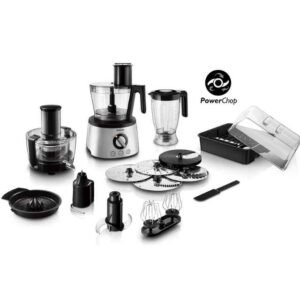
Philips Food Processor HR-7778
0 out of 5(0)- Brand: Philips
- Model: HR-7778
- Housing: Stainless Steel
- Bowl Including Lid: SAN
- Kneading Tool: POM & Metal
- Pusher: ABS
- Speed Knob: ABS
- Discs, Chopping Knife: Stainless Steel
- Knife Holder, Balloon Beater: POM
- S-Blade, Knife, Metal Discs: Stainless Steel
SKU: n/a
Showing the single result
Philips Food Processors in Pakistan — Powerful prep for everyday cooking
Quick intro
A Philips food processor is your shortcut to everyday prep: chopping onions for qeema, grinding chutneys, slicing for pakoras and salads, and even kneading dough for chapati or paratha with the right attachment. At Emirates Electronics, we focus on authentic Philips stock with official warranty so you can buy confidently. If you’re comparing the Philips food processor price in Pakistan, remember that prices can vary with imports and exchange rates—always check the live product cards for current availability and deals. Whether you’re in Karachi, Lahore, Islamabad, or anywhere nationwide, our goal is to help you choose the right capacity, power, and attachments for your kitchen and budget.
Shop by need (30-second guide)
Small kitchens & basic tasks: If you mostly slice, shred, and make small batches of chutney, a compact unit with a modest motor and a ~2.1L bowl is space-friendly and easy to clean.
Family cooking & frequent dough: For everyday meals and kneading dough more than once or twice a week, look for a sturdier motor and a bowl that can handle regular volumes without crowding.
Batch prep & entertaining: If you meal-prep for the week or host often, a higher-power model with multiple discs and a larger bowl will save time on slicing, shredding, and grating.
How to choose a Philips Food Processor
Motor power tiers (700W–1300W)
Motor wattage is a practical way to gauge capability, but it isn’t the only factor—blade design and attachments also matter. As a simple guide, processors in the lower-power range (e.g., around 700W) are great for everyday chopping, grating, and quick sauces. Mid-to-higher ranges are better suited to frequent dough kneading, tougher veggies, and larger batch quantities. If you plan to use the machine daily or for denser mixes, stepping up in wattage can improve consistency and reduce strain on the unit.
Bowl & jar capacity
Capacity determines how much you can process without stopping to empty the bowl. A compact ~2.1L bowl suits small households or countertop-conscious kitchens, while larger bowls help when prepping in bulk or cooking for extended family. If counter space is tight—common in city apartments—choose a footprint that fits under your upper cabinets and consider where the blender jar (if included) will be stored. For smoothies and lassi, a separate blender jar can be useful so you don’t swap blades mid-recipe.
Note: Availability of specific models and bundles (e.g., with blender or juicer) changes over time; always review the product card for up-to-date details and included accessories.
Attachments & bundles: choose what you’ll actually use
Attachments vary by model, so focus on the tools you’ll reach for weekly. Slicing and shredding discs speed up salad, pakora, and coleslaw prep. A chopping blade handles onions, chutney bases, and kabab mix. If you make roti or paratha often, a dough tool can help bring dough together consistently without overworking it. For mayo, cream, or light batters, an emulsifying/whisk disc is handy. Families who juice citrus for nimbu pani may prefer a citrus press, while smoothie fans can look for a blender jar so lassi and shakes don’t tie up the main bowl. Some bundles include a small chopper/grinder cup that’s practical for dry masala or nut chopping in small batches. Because included parts differ by SKU, always check the product card photos and “in the box” list before buying.
Build, safety & convenience
Day-to-day usability matters as much as power. A clear, locking lid and bowl interlock improves safety by preventing accidental starts. Non-slip feet reduce vibration on countertops, especially when shredding tougher vegetables. Consider footprint and storage—will the bowl and discs fit in your cabinet, and can the machine slide under upper shelves in a typical Karachi apartment kitchen? Look for dishwasher-safe parts if you use a dishwasher; if washing by hand, warm (not boiling) water and mild detergent help preserve plastics and seals. Pakistan uses 220–240V, 50Hz; most Philips units are compatible, but it’s good practice to use a surge protector during voltage fluctuations or on UPS/inverter lines. Cord length and on-board disc storage are small conveniences that make a big difference when counter space is tight.
Warranty & after-sales in Pakistan
Official warranty means the product is sourced through authorized channels with access to brand-approved service. To verify authenticity, check for brand warranty stickers, match the model and serial on the box and the unit, and keep your tax invoice safe. Warranty coverage and duration can vary by model and batch; the most reliable details are on the product card and in the included booklet. If service is ever needed, you’ll typically contact the brand’s helpline or an authorized center; we can guide you to the correct process via WhatsApp 0339-2009000. For peace of mind, unbox carefully and test the basic functions (pulse, chop, slice) within your return/check window so any issues are spotted early. Availability of replacement bowls, lids, and discs can change over time—feel free to ask us about current options before you order if spares are important for your kitchen.
Popular Philips models you’ll find with us (overview)
Compact & value picks (HR73xx family such as HR7310 / HR7301)
If your priority is daily chopping, slicing, and quick sauces in a smaller Karachi apartment kitchen, compact models from the HR73xx family (e.g., Philips food processor HR7310, HR7301) are popular for their space efficiency and straightforward operation. They’re a sensible entry into a multi-purpose food processor machine without overloading your counter. Exact bowl size, motor wattage, and included discs vary by SKU—please review each product card for current specs and what’s in the box.
Mid-range versatility (e.g., HR7320 series)
For families who cook most days and want more flexibility, models like the Philips food processor HR7320 range typically balance capacity and attachment options well. They’re a good fit if you alternate between shredding vegetables, mixing kabab mince, and occasional dough kneading. Again, capacities and accessories differ across specific SKUs; check the listing photos and description before you order.
Legacy or sought-after units (e.g., HR7627)
Some shoppers look for the Philips food processor HR7627 due to familiarity or matching an older set of attachments. Availability can vary by batch and import cycle, so it’s best to confirm stock on the category page. If you’re comparing the Philips food processor price in Pakistan (including marketplace/Daraz price), remember that seller type and warranty status affect value—official-warranty units offer brand-backed support.
Bundles: with blender, with juicer, chopper/grinder cups
Prefer smoothies and lassi? Choose a bundle Philips food processor with blender so cold drinks don’t tie up the main bowl. If you juice citrus often, look for a Philips food processor with juicer or citrus press attachment. Many shoppers also want a chopper/grinder cup for dry masala and nuts in small batches. Included accessories are model-specific; always confirm the “in the box” list on the product card.
Philips Food Processor vs Food Factory vs Blender (what to buy?)
Core tasks & outcomes
Food processor: Best for slicing, shredding, grating, chopping, and mixing; with the right tool it can bring dough together for chapati/paratha. Food factory: Similar idea but usually packaged as a broader bundle (more jars/tools) for all-round prep. Blender: Excellent for liquids (smoothies, soups, sauces) but not a substitute for slicing/shredding discs.
Capacity, power & space
If you cook for 2–4 people, a compact processor is usually enough; batch prep or larger families benefit from bigger bowls and stronger motors (e.g., stepping up from the 700W class toward higher wattage). Consider storage height under cabinets and where extra jars will live—especially in apartments with limited counter depth.
Pakistani kitchens & power backup
On UPS/inverters, high draw can shorten backup time; many households run prep during line power instead. Use a surge protector during voltage fluctuations. For frequent dough, higher torque helps; for chutneys and sauces, even compact machines are fine when used in sensible batch sizes. Choose based on your weekly tasks rather than chasing maximum wattage.
Care, use & maintenance
First-use checklist
Unbox carefully and verify the model code matches your invoice. Wash the bowl, lid, pusher, blades, and discs with mild detergent and lukewarm water, then dry completely before first use. Assemble the bowl and lid until they click into place—most units won’t start unless interlocks are engaged. Run a brief “empty” test (few pulses) to confirm smooth operation, then try a soft item like cucumber to get familiar with feeding and disc orientation.
Keep the tax invoice and warranty booklet safe. If any part arrives damaged or missing, contact us promptly within your return/check window so we can guide next steps. Avoid testing dense dough on the first run; begin with light chopping and slicing to learn speeds and pulse timing.
Dough & chopping tips for Pakistani recipes
For chapati or paratha, add flour first, then pulse in water gradually until the dough just comes together; rest it covered for 10–15 minutes before rolling. For kabab mince, pulse onions and herbs separately to avoid excess water, squeeze if needed, then combine with meat and spices for even texture. When making chutneys, use short pulses and scrape down the bowl to prevent over-processing.
Load evenly and avoid overfilling, especially with harder vegetables like carrots or beetroot. If the machine strains or stalls, stop and reduce batch size. Cold ingredients slice cleaner and help reduce mushiness in salads.
Cleaning & storage best practices
Disconnect from power before disassembly. Wash blades and discs immediately after use to prevent staining and odors; a soft brush helps around the hub and edges. Avoid harsh scourers or boiling water that can warp plastics. Dry thoroughly to prevent trapped moisture.
Store blades and discs in a safe container or on-board caddy (if provided) to protect edges and fingers. Keep the motor base dust-free; a quick wipe after each session prevents buildup. If you use a UPS or inverter, plug the processor into a surge-protected outlet and avoid simultaneous high-draw appliances on the same line.
FAQs
What affects the Philips food processor price in Pakistan?
Prices vary with exchange rates, stock batches, and whether the unit carries an official warranty. Marketplace listings (e.g., “Philips food processor Daraz price”) may differ by seller type. Always compare like-for-like models and verify warranty status before deciding.
How do I confirm official warranty and authenticity?
Check warranty stickers, match model and serial numbers on the box and unit, and retain your tax invoice. If you need help, message us on WhatsApp at 0339-2009000 and we’ll guide you to the right process for brand-authorized service.
Do all models include a blender or juicer?
No—bundles vary. Some include a blender jar for shakes and lassi, others add a citrus press or juicer, and some are bowl-only. Read the “in the box” list and photos on each product card to confirm what’s included.
What capacity is right for my home?
Compact ~2.1L bowls suit smaller households and tight counters. For larger families or batch prep, step up to a bigger bowl and a more powerful motor. Choose based on tasks you do weekly rather than headline wattage alone.
Are spare parts and attachments available?
Availability changes by batch and model. If you need replacement bowls, lids, or discs, ask us before ordering so we can confirm current options and delivery timelines.