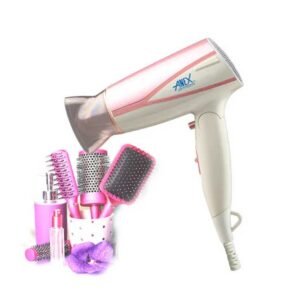
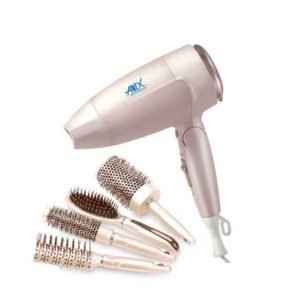
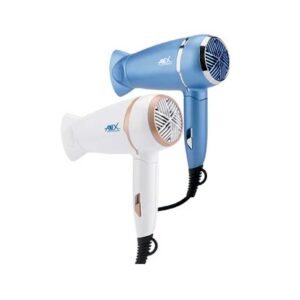
Choosing a hair dryer (also called a hair blower in Pakistan) is mainly about matching your hair type and routine to the right features—then shopping smart so you don’t overpay for specs you won’t use. On this category page, you’ll find simple explanations, price ranges for Pakistan, and quick filters to jump straight to what you need—from everyday models to professional 2000W dryers, travel-friendly foldables, and specialty tools like hot air brush stylers and diffusers. Use the guidance below to narrow your options, then explore the product grid to compare live prices, specs, and warranty details on each product page.
Shop Hair Dryers by What Matters to You
Quick Filters (above the product grid)
Filters help you cut through hundreds of listings in seconds. Start with the type that suits your styling goals, then refine by wattage and use case. For example, if frizz control is a priority, ionic models are a smart bet; if you’re chasing faster drying times for thick or long hair, a higher-wattage motor with multiple heat/speed settings will feel like a real upgrade. Aim for filters that reflect how you’ll actually use the dryer, not just the latest buzzword. This keeps your shortlist practical and budget aware.
Here are the most helpful filter groups and what they change for you:
- Type: Standard · Ionic (reduces static/frizz) · Ceramic (more even heat) · With Diffuser (curly/wavy definition) · Brush/Hot Air Brush (dry + style in one) · Foldable Travel · Mini Portable.
- Wattage: ≤1200W (travel/hostel) · 1400–1800W (daily home use) · 2000W+ (fast/pro-style drying). Higher wattage typically means more power and shorter drying times, but heat control still matters for hair health.
- Use Case: Daily home · Curly hair (choose diffuser) · Salon/professional · Travel/hostel. Selecting a use case applies multiple filters at once for a cleaner, more relevant product list.
- Brands: Philips · Westpoint · Anex · Remington (plus other stocked brands). Filtering by brand helps if you prefer a certain warranty network or accessory style.
As you apply filters, keep an eye on the essentials: at least two heat and two speed settings, a cool-shot button to set styles, a concentrator for sleek finishes, and a removable rear filter for easy cleaning. These basics make day-to-day styling smoother and extend the life of your dryer—especially in homes where dust or lint buildup is common.
Popular Shortcuts (linked chips)
If you’re not sure where to start, use the shortcut chips right above the grid. These one-tap options combine the most common needs with the most searched specs in Pakistan. They’re especially helpful on mobile: you jump straight to a curated slice of the catalog without manually combining filters. From there, you can still adjust price, brand, or features in the left sidebar or top toolbar.
Try these quick pathways to reach a relevant shortlist fast:
- Professional hair dryer 2000W — for salons, thicker hair, or faster morning routines.
- Travel foldable hair dryer — compact body; some models include dual-voltage (check product page).
- Ionic hair dryer — better for frizz-prone hair or humid days.
- Hair dryer with diffuser — ideal for curly/wavy hair to preserve shape and reduce frizz.
- Brush hair dryer (hot air brush) — dry and style in one step; great for quick blowouts.
- Mini portable hair dryer — lightweight for hostel, gym, or keep-in-bag backups.
Each shortcut opens a focused view of the catalog, so you can compare like-for-like options: similar wattage ranges, shared attachments, and comparable price bands. When a model catches your eye, open the product page to confirm package contents (e.g., diffuser included or sold separately), cord length, warranty terms, and any bundled accessories specific to Pakistan inventory.
Hair Dryer Price in Pakistan (2025): What to Expect
Price bands (indicative)
Prices for hair dryers in Pakistan vary with wattage, motor design, and features such as ionic/ceramic tech and included attachments. To make budgeting easier, think in bands rather than a single “average” price. This way, you’ll have realistic expectations before you hit the grid filters. Keep in mind that promotional periods and model refreshes can nudge prices up or down during the year, so always rely on the live price on the product card.
Entry (≈ Rs. 3,000–7,000): These are great for basic home drying. Expect 1200–1600W, 1–2 heat/speed levels, and a concentrator nozzle. Some units add a cool-shot button and removable filter. If you dry hair a few times a week and value simplicity, this tier makes sense. Just verify cord length and plug type for your usage at home.
Mid (≈ Rs. 7,000–12,000): You’ll start seeing 1600–2000W motors, ionic or ceramic elements, and more refined controls. Drying is faster and finish quality improves, especially on frizz-prone hair. Many models here include both concentrator and diffuser attachments, which is ideal for families with mixed hair types. If you style several times a week or share a dryer, the balance of speed and care in this band is excellent.
Pro (≈ Rs. 12,000–15,000+): Typically 2000W+ with multiple heat/speed combinations, better airflow engineering, and sturdier build quality. Salons, thick hair, or anyone who needs a quick dry before work will appreciate the time savings. Look for temperature regulation features that prevent overheating and a proper cool shot to set styles. At this level, also check the warranty duration and service access in your city.
These ranges are practical guidelines rather than quotes. The final price depends on the specific model, stock, and any ongoing promotion. For the most accurate numbers today, open the product pages in this category and compare the listed price, included attachments, and warranty notes side by side.
How to get the best value
Start by matching wattage to your hair type and time budget. If your hair is fine or shoulder-length, 1400–1600W with good airflow is usually enough. For thick, long, or very dense hair, a 2000W unit with multiple speeds will save minutes every morning. Remember that heat and speed controls matter as much as wattage: it’s the combination of airflow and temperature that determines both drying time and hair health.
Next, pick features you’ll actually use. If frizz is a recurring issue, ionic technology is worth it; if your hair is easily damaged, ceramic elements and a reliable cool shot become more important. Families should look for a package with both concentrator (sleek styles) and diffuser (curly/wavy definition). Finally, choose a comfortable weight and handle design—you’ll feel it during longer sessions or when styling children’s hair. This approach keeps your spend tight while still delivering the finish you want.
Safety, convenience, and longevity also impact value. A removable rear filter makes cleaning easy and prevents lint buildup that can stress the motor. A tangle-resistant cord and a balanced handle reduce wrist fatigue. In Pakistan’s 220–240V environment, most local models are plug-and-play, but for travel, always confirm voltage on the product page; some foldable units support dual-voltage while others do not. These small checks prevent surprises and help your dryer last longer.
Once you’ve aligned features and budget, use the sort controls in the grid. Sort by “Newest” if you care about the latest revisions, or by “Price: Low to High” to see where features begin to appear in your budget. Add two or three finalists to your shortlist, open the individual pages, and verify attachments, warranty, and return policies before checkout. That extra two minutes is the difference between a good buy and a great one.
Best for You — Curated Picks by Use Case
Everyday Home Drying (Straight or Lightly Wavy Hair)
If you mostly want quick, comfortable drying before work or school, look for a hair dryer in the 1400–1800W range with at least two heat and two speed settings. This balance gives you enough airflow to cut drying time without running too hot for daily use. A cool-shot button helps seal the cuticle after styling, while a removable rear filter makes cleaning easy and keeps airflow strong over time. Most families in Pakistan will feel perfectly served by this segment, especially if the dryer includes a basic concentrator nozzle for sleeker finishes on the ends.
In apartments across Karachi, Lahore, and Islamabad where humidity can fluctuate, ionic and ceramic options become more appealing for daily routines. Ionic models help counter static and flyaways after towel drying, while ceramic elements spread heat more evenly across sections of hair. If you share a bathroom or style kids’ hair, check weight and handle comfort; a lighter unit reduces wrist strain during longer sessions. For budget planning, compare “Entry” and “Mid” price bands and pick the first model that includes a cool shot, a concentrator, and a washable filter—those three factors matter more than extra marketing terms.
Curly & Wavy Hair (Diffuser-First)
For curls and waves, your priority is definition with minimal frizz. Choose a hair dryer that either includes a diffuser in the box or explicitly supports one sold separately. A diffuser spreads airflow over a wider area, letting curls set without being blasted out of shape. Aim for medium heat and medium airflow, then finish with a cool shot; this routine preserves curl pattern and adds bounce without puffiness. If you’re shopping on a tight budget, it’s better to choose a slightly lower-wattage model with a proper diffuser than a higher-wattage model with no compatible attachment.
On humid coastal days in Karachi or during monsoon spells nationwide, ionic technology can make a visible difference for curly hair. It reduces static so your curl clumps hold together after scrunching with a leave-in product. Look for a dryer with clearly labeled heat and speed controls—being able to fine-tune both is more important than chasing the maximum wattage. If you share with a straight-haired family member, make sure the package also includes a concentrator so everyone’s needs are covered. When comparing options, open the product pages to confirm whether the diffuser is included or if you need to add it to cart separately.
Salons & Fast Morning Routines (Professional Hair Dryer 2000W+)
If time is your limiting factor—or you run a salon—consider a professional hair dryer rated around 2000W or higher. The main benefit isn’t just heat; it’s stronger, more consistent airflow that shortens drying time on thick, long, or high-density hair. With that power, heat management becomes essential, so check for multiple heat/speed combinations and a reliable cool shot. For prolonged use typical of salon work, cord length, balance in hand, and an easy-clean filter are not “nice-to-haves”; they affect daily comfort and the motor’s lifespan.
In busy salon settings across Pakistan, durability and service accessibility are practical concerns. Before buying, verify warranty terms on the product page and check whether spare concentrators or filters are easily sourced. At home, if you’re upgrading for speed, try pairing a 2000W dryer with sectioning clips and a brush that suits your hair type—this combo yields salon-like results without over-drying. Remember: higher wattage accelerates drying, but it’s controlled technique and heat discipline that protect hair health over the long term.
Travel, Hostel & Gym (Foldable / Mini Portable Hair Dryer)
For on-the-go use, a foldable hair dryer or mini portable model keeps your bag light and saves space in hostel lockers. These compact units typically run ≤1200W, which is less powerful than home models but sufficient for quick touch-ups or shorter hair. Some travel dryers support dual-voltage; always check the specification table on the product page rather than assuming. If you travel within Pakistan by bus or train and carry limited luggage, prioritize a foldable handle, protective pouch, and a simple concentrator attachment. These features reduce wear and prevent scuffs in transit.
In shared living spaces or gyms where outlets might be scarce, a lighter unit with a standard-length cord is easier to manage. If your hair is thick or very curly, a compact dryer may feel slow; consider a mid-wattage foldable option instead of the tiniest mini. To tame frizz after a quick workout rinse, use medium heat and moderate airflow rather than blasting at maximum—this prevents puffiness. For students, compare the total package weight and plug ergonomics; a comfortable grip and a hinged handle that locks securely matter more than an extra marketing feature you won’t use.
Styling in One Step (Brush Hair Dryer / Hot Air Brush)
If you want blowouts without juggling a separate brush, consider a brush hair dryer (also called a hot air brush). These tools combine airflow and a round or paddle brush to smooth and shape in a single pass—handy for school runs, office mornings, or travel when counter space is tight. They’re gentler than high-heat irons and can add volume at the roots with less technique. For shoulder-length, layered, or fine hair common among many Pakistan shoppers, the time-to-style improvement is often noticeable.
When comparing hot air brushes, look at barrel shape and bristle type. Round barrels maximize lift and curl, while oval or paddle designs deliver a sleek, straight finish with bend at the ends. Choose multiple heat settings and a cool option to set volume without over-drying. If your hair is very dense or below mid-back length, you may still prefer a traditional 2000W dryer plus brush for faster moisture removal, then use a hot air brush for finishing touches. This two-tool approach offers speed plus polish without excessive heat exposure.
Buying Guide — Choose the Right Hair Dryer (Fast, Safe, Frizz-Controlled)
Wattage & Motor Basics: What Power Really Changes
Wattage is a shorthand for how much electrical power the dryer can draw, which in practice influences airflow strength and potential heat. For short, fine, or children’s hair, 1400–1600W is comfortable for regular use without feeling harsh. For thick, long, or very dense hair, a 2000W dryer moves more air and trims minutes from your routine—especially helpful on busy mornings in Pakistan’s larger cities. Remember that power alone doesn’t guarantee a better result; how the dryer controls heat and channels airflow is just as important. A lower-wattage unit with thoughtful airflow design can outperform a higher-wattage model that blasts uneven heat.
You’ll also see references to motor types. Many household dryers use DC motors that are lighter and typically quieter, which is good for everyday home use and travel. Some higher-end or professional models use AC or brushless motors designed for durability and consistent airflow during longer sessions, such as in salons. If you mostly dry a few times a week, DC is fine; if you dry multiple heads back-to-back or need reliable performance for years, a pro-leaning motor can be worth the spend. Whichever route you choose, prioritize multiple heat and speed settings so you can tailor airflow and temperature to your hair on any given day.
Technologies Explained: Ionic, Ceramic, Tourmaline & Temperature Control
Ionic dryers are popular in humid climates because they help reduce static and flyaways, which makes hair look smoother after towel-drying. The benefit shows up most on frizz-prone textures and longer lengths that pick up surface frizz during monsoon or coastal humidity. Ceramic elements aim to distribute heat more evenly, which can feel gentler and help avoid hot spots that roughen the cuticle. If your hair is fine, color-treated, or easily dried out, ceramic is a sensible quality-of-life upgrade even at mid-range prices.
Tourmaline coatings and similar airflow enhancements are marketed to boost smoothness; consider them a plus rather than a must. What matters more day-to-day is a reliable cool shot to set the style and a clear separation between heat and speed controls. This lets you mix a higher airflow with a moderate temperature—ideal for quick drying without scorching. As a rule of thumb in Pakistan’s 220–240V environment: start on medium heat and medium speed, increase only if you’re pressed for time, then finish with a cool shot to close the cuticle and lock in shape.
Attachments & When to Use Them
Concentrator nozzles narrow the airstream for sleeker finishes, helping you direct airflow down the hair shaft while guiding with a brush. They’re essential for straight, polished looks and for taming flicked ends after a long day. A diffuser spreads airflow over a larger surface so curls and waves dry with definition instead of being blown out of shape. If you wear curls in Karachi’s humidity or during monsoon months, a diffuser paired with medium heat is a game-changer for frizz control. For households with mixed hair types, having both attachments in the box keeps everyone happy without buying a second dryer.
Comb or brush attachments clip onto some dryers to detangle and stretch curls during drying, useful for creating a smooth base quickly before final styling. However, they’re not universal; always check your product page to confirm compatibility and what’s included. If you’re considering a brush hair dryer (hot air brush), treat it as a separate tool: it’s designed to dry and style in one, offering lift and smoothness with less coordination than a round brush plus dryer. For travel or hostel living, a simple concentrator plus a foldable handle may be the most practical combo—small, durable, and easy to pack.
Match Settings to Hair Type: Simple, Repeatable Routines
Fine or fragile hair: Focus on gentle heat and higher airflow rather than max temperature. Towel-blot, detangle, and rough-dry on medium speed with low or medium heat until ~70% dry. Switch to a concentrator to smooth lengths with a brush, then finish with a cool shot to add shine. Ceramic or ionic features can help protect the finish without requiring extra steps, which is useful if you style multiple times a week.
Thick, long, or very dense hair: A 2000W dryer with good airflow shortens drying time significantly. Begin with high speed on medium heat to move water quickly out of the lengths, then lower heat for the finishing pass to avoid puffiness. Work in sections clipped at the crown; this makes airflow more effective and reduces arm fatigue. For regular blowouts, invest in a comfortable handle and a heat-resistant round brush sized to your layers—these ergonomic details matter more than chasing the absolute highest wattage.
Curly and wavy hair: Apply your leave-in and scrunch gently with a microfiber towel. Attach a diffuser, set medium heat and medium airflow, and dry in sections with your head tilted to encourage curl formation. Avoid blasting the roots; instead, cradle curls in the diffuser bowl and keep it moving. Finish with a cool shot to set clumps and reduce frizz. On humid days, ionic models can help curls stay defined longer between washes.
Short hair or frequent gym users: You can comfortably dry on medium heat and medium speed with a compact or travel unit, then use a concentrator for quick shaping at the fringe or neckline. If you spike or texture your hair, complete product application after you reach ~90% dry, then give a brief cool shot to lock everything in. For hostel or on-the-go setups, prioritize foldable designs and protective pouches to extend the life of your dryer in bags and lockers.
Practical Safety, Care & Longevity (Pakistan Context)
Safety starts with environment: keep the dryer away from water sources, don’t use it with wet hands, and never block the air intake while operating. Allow the unit to cool before storing, especially in tight drawers or travel pouches. In homes where dust can build up, clean the removable rear filter regularly; a clogged filter stresses the motor, reduces airflow, and shortens the dryer’s life. If you use extension cords or power strips, ensure they’re rated for the load and in good condition to avoid overheating.
Voltage in Pakistan is typically 220–240V, so locally sold dryers are generally plug-and-play at home. For international trips, confirm voltage and plug type on the product page—some travel dryers are dual-voltage, many are not. To protect electronics during voltage fluctuations or at salons with multiple high-draw tools, consider a quality surge protector that meets local standards. Store your dryer by loosely looping the cord without tight bends, and check it occasionally for wear near the plug or strain relief. A minute of care each month—wiping the housing, clearing vents, and checking the cord—keeps performance strong and helps your dryer last longer.

 Hair Dryer, Health & Beauty, Philips Hair Dryer
 Hair Dryer, Health & Beauty, Philips Hair Dryer
 Hair Dryer, Health & Beauty, Philips Hair Dryer